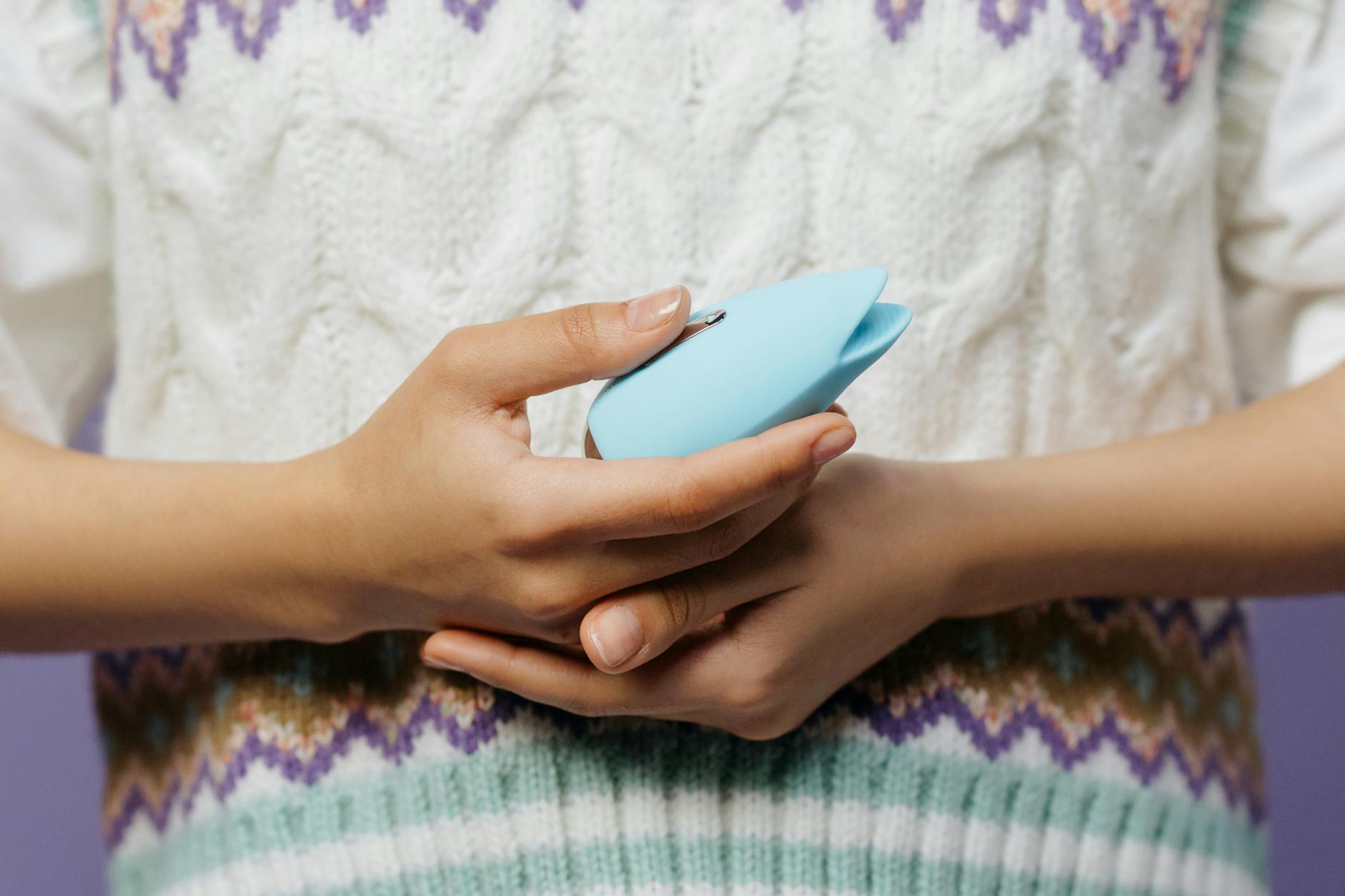
Let's talk about the awkward part first
New relationship plus sex toys equals a specific kind of tension. You're still learning each other's bodies, your preferences aren't fully mapped yet, and suddenly there's this third thing in the mix. It's not inherently complicated. But ignoring the complexity and just diving in usually backfires.
The Lem Vibrator, with its precise suction-based stimulation, is actually ideal for new couples exploring sensation together. It doesn't require deep penetration or complex positioning. It creates distinct, manageable sensations that both of you can feel and adjust. But the tool only works if you've set the right frame first.
Why new relationships need a different approach
Early intimacy is already a negotiation. You're both reading signals, adjusting speed, gauging comfort. Add a toy into that mix without conversation, and you've just complicated the information flow. Your partner might assume you need it because they're not enough. You might worry they'll think you're weird. Neither of those narratives is true, and both kill the mood.
Here's what actually helps: naming the exploration as mutual discovery instead of performance. A lemon clitoral vibrator like the Lem isn't a fix for something missing. It's a sensation tool that opens up new ways to experience pleasure together. That framing changes everything.
How to bring it up without it being A Thing
Timing matters. Don't launch this conversation mid-intimacy or right after sex when bodies are tired and brains are offline. Pick a neutral moment. Walking, cooking together, or driving works better than sitting face-to-face on the couch.
Start by telling the truth simply: "I've been thinking about trying toys together. Not because anything's wrong. Just curious." That's it. You don't need a TED talk about your sexual philosophy.
If they ask questions, answer them clearly. "What made you think of this?" Answer with curiosity, not defensiveness. "I like the idea of feeling different things together." "I read that people experience sensation differently with certain stimulation." "I think it might help me relax faster, which I'd actually enjoy more." All true, all normal.
If they're hesitant, that's information too. Don't push past reluctance. Instead: "That's fair. What would make you feel more open to trying it?" Maybe they want to pick it out together. Maybe they want to start with just looking at it, no pressure to use it immediately. Maybe they're nervous about their body and need reassurance first. Those are solvable problems.
The actual first time using a Lem together
Don't make it the main event. That's too much pressure. Instead, build it into foreplay after you're already comfortable and aroused. You've been kissing for 10 minutes, hands are wandering, and there's no time pressure.
One of you should hold it first. If you're the one with the vulva, you hold it while your partner watches and touches. This keeps you in control of pressure, speed, and intensity. Start at the lowest setting. The Lem has multiple patterns, and even pattern one can feel strong to someone experiencing suction stimulation for the first time.
Talk about what you're feeling. Not dirty talk necessarily. Just actual information: "This feels concentrated." "That pattern is intense." "I like when you touch my neck right now." Your partner learns how your body responds. You stay anchored in your own sensation instead of performing.
After a few minutes, your partner can ask: "Want me to try holding it?" or "Can I take a turn?" This puts the toy in their hands, which often helps hesitant partners feel less like they're doing something to you and more like you're both playing with a tool. The pressure shifts. They get to explore what the sensation does, what intensity works, how the toy feels in their hand.
Managing intensity and overstimulation together
One thing that surprises new couples: clitoral vibrators can feel overwhelming quickly. If your partner is holding the Lem and you suddenly feel raw or overstimulated, don't just push their hand away. Say it out loud: "I need a break." Pause. Breathe. Touch each other without the toy for a minute.
Then check in: "Want to keep going or switch to something else?" You're not failing if you need to pause. You're actually building trust in real time. Your partner learns that you'll communicate your actual limits, not just white-knuckle through discomfort.
On the flip side, if your partner is feeling self-conscious holding the toy, reassure them. "You're doing great." "I like feeling you here with me." Small statements anchor them. People who haven't used toys often worry they're doing it wrong. There's barely a wrong way to use the Lem as long as pressure is gradual and communication is live.
What happens after
Don't let the moment pass without checking in. After you've both finished or decided to switch gears, lie together for a few minutes. One of you might say: "That was different. Good different." Or "I liked feeling you guide it." Or "I'm still figuring it out." Any of these is a win.
You're not supposed to have figured out the entire landscape of shared pleasure in one session. You've just created a baseline. You know the Lem exists in your shared space now. You know your partner is willing to explore. You know you can communicate about sensation and adjustment without shame.
On the practical side: if you bought the toy, keep it accessible. Throw it in a drawer you both know exists. Don't hide it like it's evidence. This signals that shared pleasure is a normal part of your relationship, not something you're sneaking around about.
When to bring it up again
Let your partner suggest it next time. Or next few times. You initiated the first conversation and the first session. Give them space to initiate next. When they say "Want to use that toy again?" or "Should we get that out?" you've got genuine interest instead of compliance.
If weeks pass and they don't bring it up, you can circle back once. "I enjoyed that. Would you want to try again sometime?" Accept whatever they say. Maybe they're still processing. Maybe it's not their thing. Maybe they want to try a different angle. All of those are fine.
After a couple of sessions, you'll start to figure out your rhythm together. Maybe the Lem becomes part of your regular foreplay. Maybe you use it sometimes and have other ways you connect on other nights. Maybe you discover another toy feels better for both of you. All of that unfolds naturally when there's no performance pressure.
What if your styles are already pretty different
Sometimes one person wants sensation exploration and the other wants to stick with what already works. This isn't a dealbreaker. It just means you're clear about what you're each seeking.
If that's your situation, you might explore toys together only sometimes, while other sessions follow the rhythm that feels natural to both of you. You might find that introducing a toy actually helps you sync up better because it gives you a shared focus. Or you might discover that toys aren't the bridge. Connection is, and connection looks different for every couple.
The goal isn't to force yourselves into someone else's version of what "good" looks like. The goal is to stay curious together. A lemon clitoral vibrator like the Lem is just one tool for that conversation.
FAQ: New couples and shared pleasure exploration
How do I know if my partner will be receptive to toys early in the relationship?
You don't know until you ask. But you can listen for clues. Has your partner mentioned anything about their own pleasure preferences, body comfort, or openness to trying new things in other areas of life? Adventurousness in bed doesn't always correlate with adventurousness everywhere, but willingness to communicate usually does. If your partner talks openly about what they like and don't like, they're probably safe to have this conversation with.
What if I'm the one who's hesitant and my partner wants to introduce toys?
Tell them that. "I'm interested, but I'm a little nervous." Most receptive partners will ask what you're nervous about. Is it performance pressure? Fear of pain or overstimulation? Feeling inadequate? Each of those has a real answer. A low-intensity toy used slowly, with breaks, with you in control of the pace, might feel very different than your fear. Ask your partner to start incredibly gently and let you set the speed.
How do we clean the Lem and talk about that without it being awkward?
It's not awkward if you treat it like any other shared object. "Let's rinse this." "Should I wash this?" "Where should we keep it?" You're just discussing logistics. The Lem is waterproof and easy to clean. Having this practical conversation actually normalizes the whole experience. You're not being coy. You're being responsible.
Can we use the same toy if we're both exploring sensation?
Yes, absolutely. Clean it between uses and take turns. Or if you have different body types or preferences, you might eventually get two different tools. But starting with one toy that you share teaches you both how to communicate about it, which is the real skill you're building.
What if one of us has an orgasm and the other doesn't during our first time using the Lem together?
That's normal. Orgasm isn't the only measure of a good experience. You might find that one person gets there faster while the other enjoys the sensation without climax. You might both enjoy the closeness and the novelty even if neither of you finishes. You might discover that the toy helps one of you relax into pleasure while the other prefers a different path. None of this is failure. It's just data about how you each experience sensation.
Should we use the Lem as a couple every time we're intimate?
No. Let it be one option in your toolkit, not the default. Some nights you'll use it. Some nights you'll want something else entirely. Some nights you'll want just each other. Variety is what keeps shared pleasure interesting over time. If the toy becomes the only way either of you feels pleasure, that's information worth examining, maybe with a therapist. But cycling it in and out as one choice among many is exactly how this should work.
The real win
Using a clitoral vibrator like the Lem with a new partner slowly isn't about achieving some specific outcome. It's about practicing vulnerability, communication, and curiosity together. Those skills transfer to everything else in the relationship. You're not just learning how to use a toy. You're learning how to ask for what you want, hear your partner's hesitations without taking them personally, and adjust in real time. That's the foundation of real intimacy.
If you're ready to explore this angle of your relationship, honesty and patience are your only actual requirements. The Lem just makes it easier to do with precision and control.