
Understanding numbness that isn't physical
Let's be real: numbness during sex or when you try to pleasure yourself isn't always about your body failing you. Sometimes it's your nervous system protecting you. Burnout, chronic stress, anxiety, dissociation, or even just living at 110% for years can create a wall between your mind and your physical sensations. You're present, but you're not there. It's like watching yourself from three feet away.
This kind of numbness is wildly common, and it's not something you fix by pushing harder or being more present. It requires patience, the right tool, and a completely different approach to pleasure.
Why numbness feels different from low libido
When you have low libido, you're not interested. When you have numbness, you're interested, you're trying, but the signal isn't reaching your brain. Your clitoris might respond physically to touch, but you can't feel it, or you feel it as distant and muted, like your sensation is running through thick glass.
Numbness often shows up alongside other symptoms. You might feel disconnected from your body generally. A hug doesn't land. Food tastes fine but doesn't delight you. You laugh at jokes but don't feel the humor in your chest. This is dissociation talking, and it's treatable. The path back starts small.
A lemon clitoral vibrator like the Lem is particularly useful here because the suction mechanism creates a different type of stimulation than conventional vibration. It mimics the sensation of oral sex without requiring you to process the dynamic of having a partner. You can focus purely on what your body is registering.
The groundwork before you start
Three things need to be in place first.
1. Permission to go slow. You're not trying to orgasm. You're trying to feel. That reframe matters enormously. If orgasm happens, great. If it doesn't, you've still succeeded because you registered sensation.
2. A private, uninterrupted space. Numbness lives in distraction. You need 20-30 minutes where you're not listening for your phone, not worried about being walked in on, not performing for anyone including yourself.
3. Low stakes. Don't do this after a long day when you're already depleted. Don't do it when you're sad or angry hoping it will fix the mood. Do it when you have emotional bandwidth, even if just a little.
The five-step process for reconnection
Step one: start with non-sexual touch.
Before you use any vibrator, spend 10 minutes touching your body the way you'd comfort a friend. Stroke your forearms. Hold your hand to your face. Run your fingers down your legs. Notice what sensations register and which ones feel muted. This is mapping, not arousal.
Step two: introduce the Lem at the lowest intensity.
Turn it on pattern one. Don't go straight to your clitoris. Place it on your inner thigh or your labia without direct contact. Just let your body register the vibration. If you feel nothing, that's okay. You're establishing a baseline. Stay here for 2-3 minutes.
Step three: move very slowly toward sensation.
After the thigh, try the side of your clitoris. Not the tip, not full-on suction, just the side where it's less sensitive and the stimulation might feel more like something approaching on the horizon rather than immediate intensity. Spend 5 minutes here. If sensation starts to register, stay put. Don't escalate.
Step four: let intensity happen naturally, not forcefully.
If you feel something building, you can move to the tip of your clitoris or increase the pattern. But the key word is if. If nothing is building, drop back to step three and try again next time. The point of this whole process is that you're retraining your nervous system to trust that sensation is safe and available. Pushing past numbness doesn't work. Patience does.
Step five: notice without judgment.
After 20 minutes, stop. Did you feel something, even a flicker? That's data. Did you feel nothing? That's also data. There's no success or failure here, just information about where you are today.
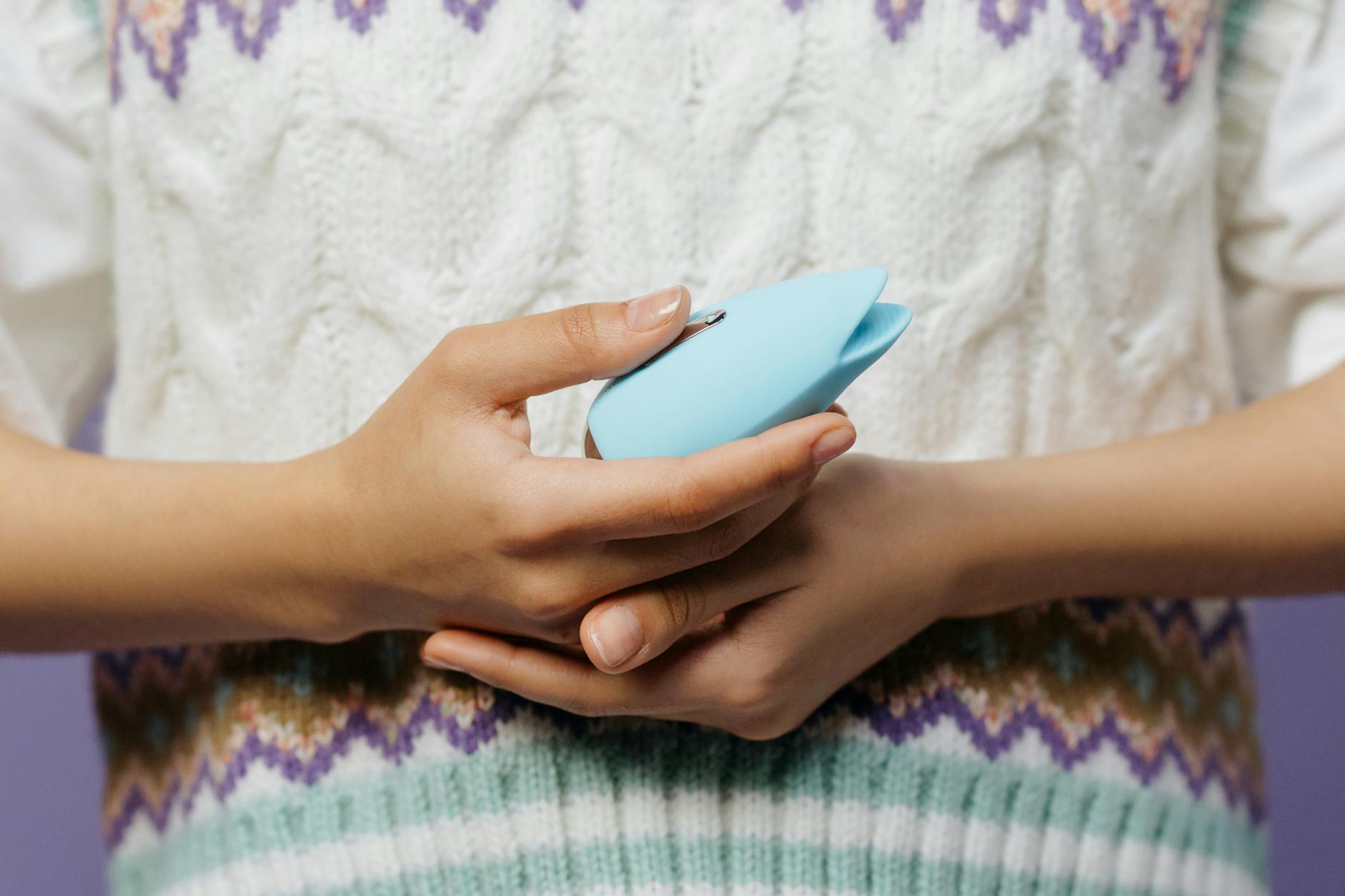
Photo by cottonbro studio on Pexels
How often to practice, and what to expect
Most people see sensation returning within one to three weeks if they practice this way twice a week. I say sensation not arousal, because reconnecting with your body's ability to feel is the goal. Arousal and orgasms will follow once your nervous system trusts that touch is safe again.
There will be days when you feel more than others. That's normal and has almost nothing to do with the vibrator. It depends on your stress levels, your sleep, whether you're mid-cycle, whether you're in a relationship shift. Some days sensation comes easily. Some days it stays quiet. Neither means the process isn't working.
One common mistake is thinking that if you felt something on Tuesday, you should feel the same thing on Thursday. Your body isn't consistent during numbness recovery. You're building a new baseline, and that path is not linear.
When numbness is paired with relationship dynamics
If you're exploring this with a partner nearby, they need to understand what you're doing and why. You're not rejecting their touch. You're not saying the relationship is broken. You're doing something internal that's only tangentially about them. A good partner will get that. A confused one might feel rejected or make it weird.
If your numbness is connected to relational trauma, disconnection from your partner, or feeling unseen in your relationship, the vibrator alone won't fix that. You might need how to reconnect with your body during relationship counseling alongside this sensory work, because pleasure is partly nervous system, partly emotional context. Both matter.
The role of curiosity over expectation
Numbness thrives on pressure. The moment you decide "I'm going to feel something today or I've failed," you've already activated the nervous system stress that created the numbness in the first place. The Lem works best when you're genuinely curious. "Okay, what does my body register today?" instead of "I need to orgasm to prove this is working."
This is harder than it sounds, especially if you've been feeling numb for months and you're desperate to feel like yourself again. But the desperation is the thing that locks the door. Patience, weirdly, is what opens it.
Lemon vibrators and texture matters
One reason the Lem in particular helps with numbness is the silicone. It's warm, it has weight, and it doesn't feel clinical or demanding. People rebuilding sensation often respond better to lemon clitoral vibrators than to harder plastic or metal toys. The Lem's material and design feel like something supportive rather than something that's going to demand performance from you.
Water-based lubricant also helps. A little slickness means less friction and less chance of overstimulation pulling you further into numbness. It just makes the whole experience gentler and more approachable.
When to ask for help
If you've been trying this approach for four weeks and sensation hasn't budged at all, and you're also experiencing numbness in other parts of your life (emotional flatness, disconnection from food or joy, difficulty concentrating), talk to a therapist or doctor. Numbness that doesn't respond to gentle, repeated practice might be pointing to depression, dissociation, or anxiety that needs professional support. The vibrator is a tool for reconnection, not a treatment for a mental health condition.
Similarly, if numbness is paired with pain or if using the Lem causes any discomfort, stop and get checked by a healthcare provider. Numbness sometimes masks pain that you can't feel yet. You want to rule that out.
The long game of coming home to your body
Reconnecting after numbness is slow work. It's not Instagram-friendly. You won't have a breakthrough moment where suddenly everything is back. Instead, you'll notice one day that you felt something you didn't feel last month. That your body is showing up. That pleasure is becoming available again, even if it's smaller and quieter than it was before.
That's exactly what should happen. Your nervous system is learning to trust again. Every time you show up with patience instead of pressure, with curiosity instead of expectation, you're teaching your body that sensation is safe. That's the real work, and it's worth it.
Frequently asked questions
How do I know the difference between numbness and low desire?
Numbness means you're interested and you want to feel, but the signal isn't getting through. It's like the volume is turned all the way down. Low desire means you're genuinely not interested in sex. With numbness, you might feel frustrated because you want pleasure but can't access it. With low desire, you're content without it. The Lem approach works for numbness. Low desire often points to relationship issues, health factors, or depression that need different support.
Can I use any vibrator to reconnect, or does it have to be a Lem?
The principles work with any vibrator, but the Lem's design is particularly helpful because suction is a different sensation than direct vibration. Suction mimics oral sex, which many people find more approachable when they're already feeling disconnected. If you have a different vibrator, start with the lowest setting and use the same patient, slow process. The tool matters less than the approach.
What if I feel sensation but it doesn't lead to arousal?
That's progress. Sensation and arousal are two different things. You can feel your body and not be aroused. As your nervous system builds trust, arousal will usually follow, but on its own timeline. Some people feel sensation for a week before arousal shows up. Some take longer. Keep practicing and notice what's happening without trying to force the next step.
How long does numbness usually take to resolve?
It varies wildly. Some people see shifts within two weeks. Others take two months. It depends on how long the numbness has been there, what caused it, your stress level currently, whether you're getting enough sleep, and your nervous system's overall state. If you're still in the situation that created the numbness (high stress, busy season at work, difficult relationship), healing takes longer. You're asking your body to reconnect while it's still defending itself.
Should I tell my partner what I'm doing?
That depends on your relationship and whether you live together. If you live with someone, they'll probably notice you're setting aside time for yourself. A heads-up prevents weird questions or assumptions. You don't need to give a medical report, just something like "I'm spending some time reconnecting with my body. I'll let you know if I want to explore this together." A partner who respects you will get it. A partner who doesn't might be part of why you're numb in the first place.
Can numbness come back after I reconnect?
Yes, if you return to the same stress or situation that created it. But once you've reconnected, you recognize numbness faster and you know how to work with it. It's less like starting from zero and more like remembering a skill. Your body knows the way back.
The path forward
Numbness is your body's way of saying you've been running too hard or you're not safe. Reconnecting isn't about pushing through it. It's about slowing down enough to listen. The Lem can be part of that conversation. So can therapy, rest, setting boundaries, and sometimes medication. The point is to get curious about what your body's trying to tell you, then answer it with gentleness instead of force. That's how you actually come home.