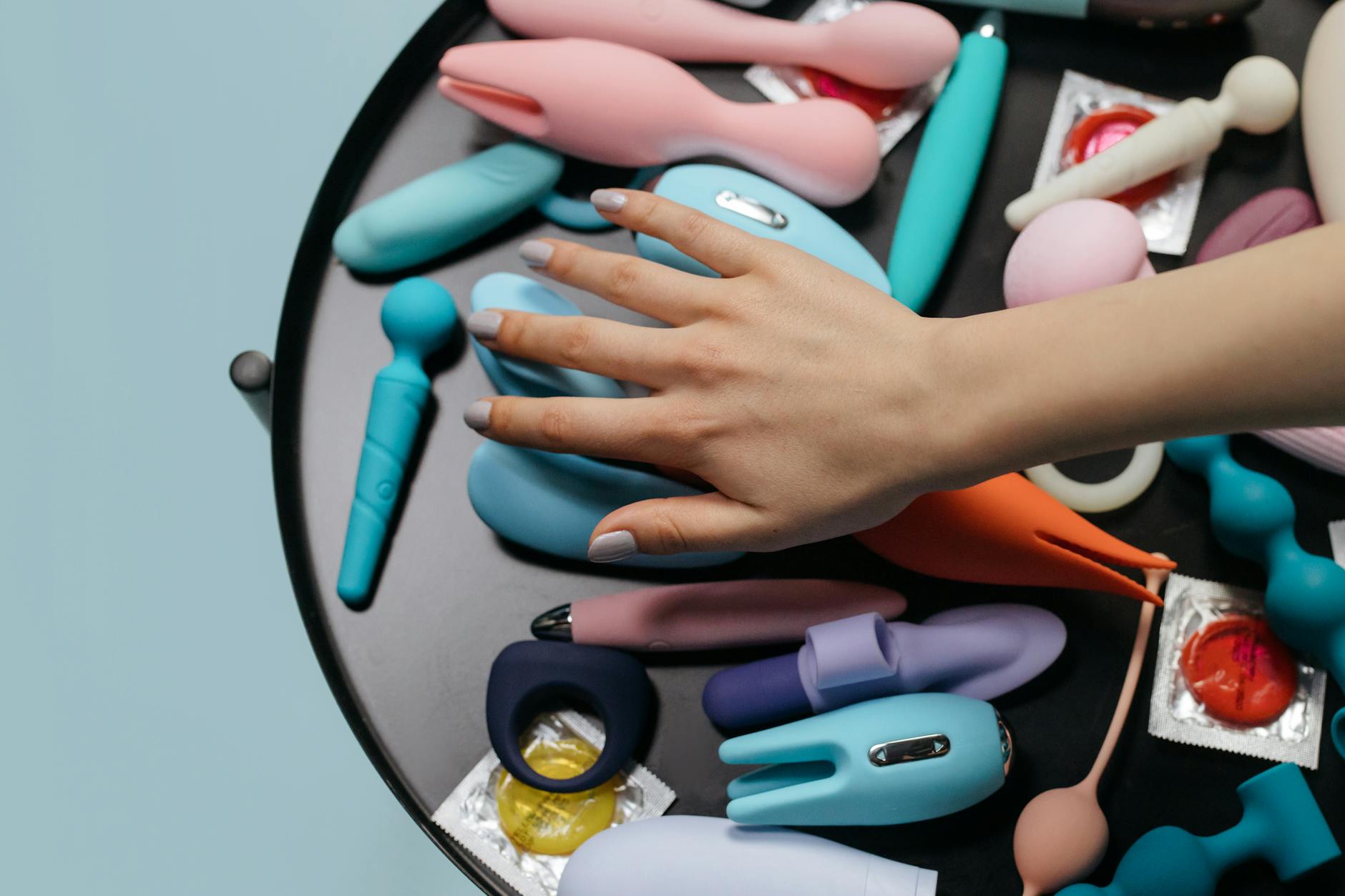
How to Use a Lemon Vibrator When Rebuilding Pleasure After Menopause
Let's start with the thing no one tells you clearly: menopause changes pleasure. It doesn't end it. That distinction is crucial because most conversations about menopause and sex land in one of two unhelpful camps: "everything stops working" or "nothing really changes, you'll be fine." Both are wrong, and both leave people confused and often disappointed.
What actually happens is more nuanced, more manageable, and honestly more interesting than either story suggests.
What menopause actually changes about pleasure
Estrogen drops. This is the main event. Lower estrogen means tissue in the vulva gets thinner, lubrication changes, and the speed at which your body responds to stimulation shifts. You might notice arousal takes longer to build. You might notice dryness that wasn't there before. You might feel like your clitoris is less sensitive or more sensitive, depending on your body and timeline.
Testosterone also declines. Yes, people with ovaries produce testosterone, and it's a major driver of sexual desire. When it drops, some people notice their baseline desire quiets down. Others don't notice much at all. The pelvic floor loses estrogen support too, which can change the quality of orgasm. Sometimes it feels lighter. Sometimes it intensifies in a different way.
Here's what doesn't change: the neural pathways that create pleasure. The nerve density in your clitoris. Your brain's capacity for satisfaction. Your ability to have orgasms, often deeply satisfying ones.
Many of my clients report their most intense and longest-lasting orgasms arrived after menopause. This isn't politeness. It's a consistent clinical observation.
Why a lemon clitoral vibrator works better during this transition
Traditional vibrators often rely on intense, direct friction. After menopause, thinner tissue can feel raw or overstimulated by that kind of direct pressure. A lemon vibrator uses air-suction technology instead. It creates a gentle pulse that stimulates the thousands of nerve endings in your clitoris without the same mechanical force.
The result: you get powerful stimulation without pain or irritation. Your tissue doesn't have to be as thick or as resilient for the device to work. The sensation is often smoother and more nuanced.
I recommend a lemon clitoral vibrator to post-menopausal clients for exactly this reason. It bridges the gap between what your body needs and what actually feels good.
The physical setup that makes this easier
Three things matter here.
Lubrication is non-negotiable. Not because you're broken. Because thinner tissue genuinely benefits from extra slip. Use a water-based lubricant every single time, even if your body is producing some natural lubrication. More is better. Silicone-based lubes feel richer but can damage silicone toys, so stick to water-based formulas.
Start at lower intensity. The lemon vibrator has multiple intensity levels for exactly this reason. Begin at pattern 1 or 2, not in the middle. Your tissues will adjust faster, and you'll learn your baseline faster. You can always increase from there.
Budget more warm-up time. Arousal takes longer to arrive after menopause. This isn't a flaw. It's just the timeline now. Give yourself 15 to 25 minutes of foreplay or solo exploration before bringing in a lemon vibrator. This applies whether you're with a partner or alone.
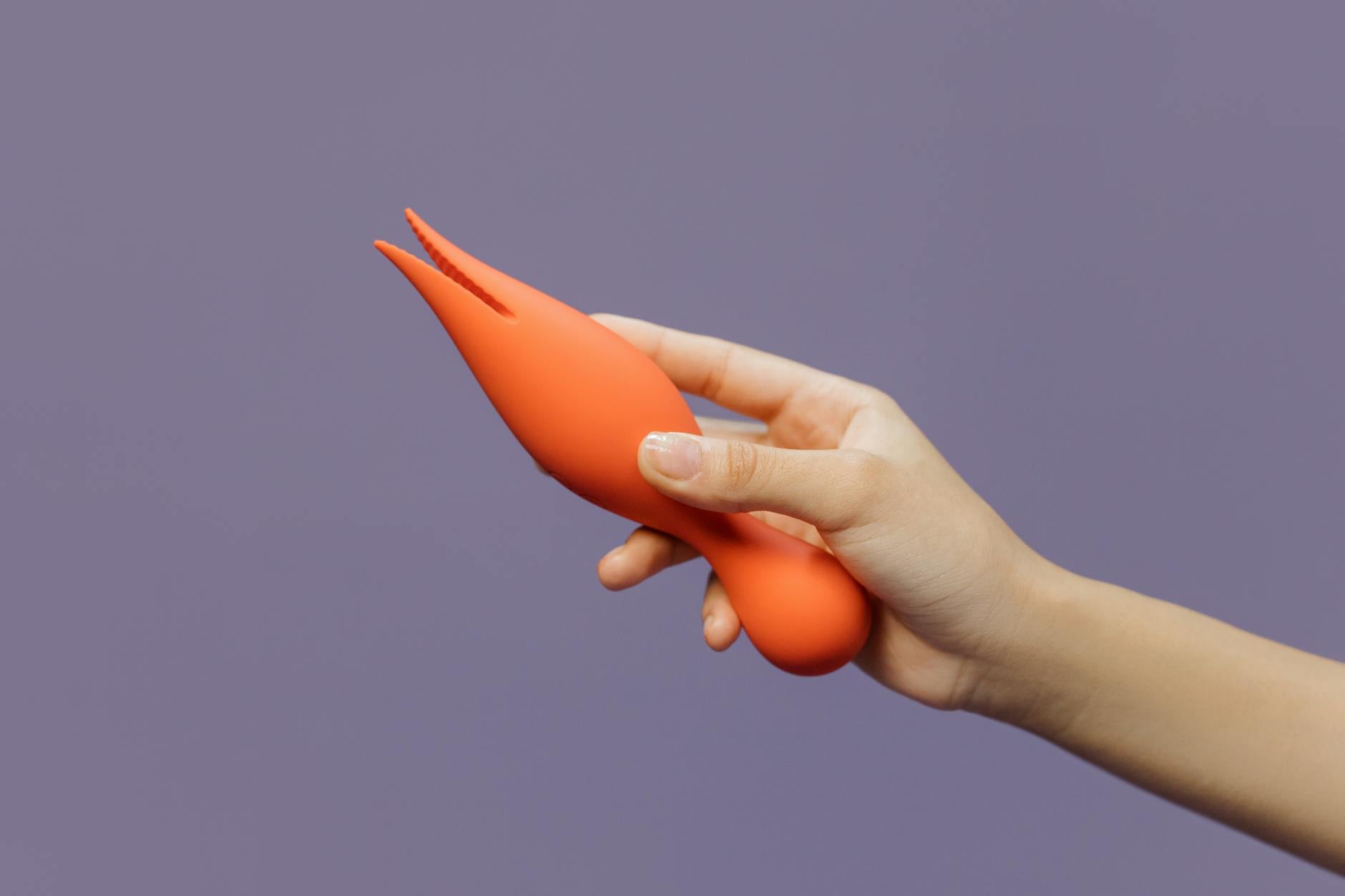
Photo by cottonbro studio on Pexels
The emotional adjustments that actually matter more
Menopause arrives wrapped in other midlife transitions. Your kids might be leaving home. Your relationship might be shifting. Your body might feel unfamiliar. Career pressures might intensify. Grief, joy, regret, and relief all show up at the same time.
When pleasure changes, the instinct is to blame hormones. Sometimes that's right. Often it's something else entirely wearing a hormonal disguise. Depression flattens desire. Relationship disconnection quiets arousal. Stress and anxiety can make your nervous system too activated to feel pleasure.
If you're partnered, this is where it gets tricky. Separating the conversations helps. "My body is responding differently to touch" is a different topic than "I want us to feel close again." Mixing them turns both into a tangle.
I've worked with many couples who assume menopause ruined their sex life, when actually the issue was resentment, poor communication, or disconnection that happened to coincide with hormonal shifts. Getting curious about what's really happening matters.
How to introduce a lemon vibrator to a partner
If you're in a relationship and want to incorporate a lemon clitoral vibrator, the conversation matters as much as the device.
Start by talking about what you've noticed in your body, not what you think they're thinking. "I've realized my arousal takes longer now and I feel best with more lubrication and a different kind of touch." Not "you're not doing it right anymore." The first is information. The second is criticism.
Then introduce the device as a tool for both of you. "I'm curious about trying this because the stimulation style feels gentler on my tissue and it might feel good for us together." This frames it as collaboration, not a replacement.
Many partners find they actually enjoy the experience more too. The lemon vibrator's suction creates different sensations against the skin. It can feel intimate and novel in a way that rebuilds curiosity.
Using a lemon vibrator solo after menopause
Solo exploration is often where the magic happens. Without the pressure of a partner's rhythm or expectations, you can find what actually works for your body right now.
Start by noticing your baseline. What patterns feel best? Do you prefer consistent suction or pulsing rhythms? Some people discover they want deeper, slower stimulation. Others find high intensity feels better now than it ever did. The only way to know is to spend time with it.
The pelvic floor matters here. As estrogen drops, the pelvic floor can get tight and tense. This actually reduces pleasure. Before using a lemon vibrator, try spending a few minutes breathing and consciously relaxing your pelvic floor. Imagine the tension releasing downward. This single shift often makes stimulation feel dramatically more satisfying.
You might also notice that your most satisfying orgasms come from a combination: a lemon vibrator for clitoral stimulation plus internal touch or pressure. Your body's capacity for blended sensation often gets richer, not simpler, after menopause.
When to see a specialist
If pain shows up during any kind of touch or stimulation, don't wait to address it. Genitourinary syndrome of menopause, or GSM, is real and common. It's also highly treatable. A menopause-trained gynecologist can offer topical estrogen creams that have minimal systemic absorption but transform the experience in weeks.
If desire has completely flatlined and hasn't returned after a few months of this kind of exploration, testosterone therapy is worth discussing with a doctor. It's not a common first-line treatment everywhere, but it exists and can be genuinely life-changing for the right person.
If you're using a lemon vibrator and still experiencing numbness or difficulty reaching orgasm, bring this up too. Sometimes the issue is medication. Sometimes it's thyroid function. Sometimes it's depression. A good gynecologist can help sort through the possibilities.
The mental shift that changes everything
Here's what I wish every person entering menopause heard: this is not the end of your sexual life. It's the middle chapter, and in many ways, the most interesting one.
You've spent decades calibrating your pleasure around other people's timing, other people's desires, other people's bodies. Suddenly, you have permission to stop. The stakes feel lower. The expectations have changed. Your body might feel less controllable, but your mind often feels freer.
A lemon clitoral vibrator in this context isn't a workaround for a broken system. It's a tool for exploring what your body is capable of now. Some people find their pleasure deepens. Some find it simplifies. Many find it becomes more intentional, more grounded, more theirs.
People Also Ask
Can you use a lemon clitoral vibrator if you have vaginal dryness from menopause?
Absolutely. In fact, a lemon vibrator is often easier on delicate, drier tissue than traditional vibrators because the suction method doesn't require the same level of mechanical friction. Add a water-based lubricant every time you use it, even if your body produces some natural lubrication. The extra slip protects tissue and makes the sensation smoother.
How long after menopause starts can you use a lemon vibrator?
You can use one anytime after menopause begins. Some people start during perimenopause, when hormones are shifting but menstruation hasn't completely stopped. Others wait until a few months into menopause. There's no "right" timeline. If you're experiencing changes in sensation or lubrication, a lemon vibrator designed for gentler stimulation can work immediately.
Does a lemon vibrator help if menopause killed your desire completely?
A lemon vibrator can help you reconnect with sensation and arousal, but it's not a magic fix for desire that's disappeared due to menopause, depression, relationship issues, or medication. If desire has completely flatlined, exploring with a gentle device like a lemon vibrator might help wake things up. But it's also worth talking to a doctor to rule out thyroid issues, medication side effects, or depression. Often the real issue isn't menopause alone.
Is it normal for orgasms to feel different after menopause?
Completely normal. Some people describe them as shallower. Others say they feel more concentrated or take longer to build. Some have their most intense orgasms ever. The clitoral nerve endings don't change, but the tissue around them does, and that shifts sensation. If orgasms feel good, different is fine. If they feel painful or completely absent, that's worth exploring with a doctor.
Can you use a lemon clitoral vibrator with HRT?
Yes. Hormone replacement therapy doesn't make vibrators unsafe. Some people find that HRT actually makes sensation feel more consistent or allows them to use a lemon vibrator at higher intensities because the tissue feels more resilient. Everyone's body is different, so notice what feels good and adjust from there.
Why does my sensitivity feel unpredictable even with a lemon vibrator?
Menopause hormones shift throughout the day and week, especially in the first few years. Some days your clitoris feels responsive. Other days it feels muted. This is normal. Your nervous system is also constantly recalibrating to lower estrogen. Stress, sleep, hydration, and where you are in any remaining hormonal cycle all affect sensitivity. Rather than fighting unpredictability, work with it. Use lower intensity on days when sensitivity is high, increase it on days when you feel muted.
Moving forward
Menopause isn't a deadline for pleasure. It's a recalibration. Your body is learning to respond differently, and that's worth exploring with curiosity instead of frustration. A lemon vibrator, used thoughtfully with proper lubrication and realistic timelines, often makes that exploration feel easier and more pleasurable than expected. The best part of your sexual life might still be ahead of you. You deserve to find out.