The thing nobody warns you about when you start SSRIs
Your depression lifts. Your anxiety settles. You feel more like yourself than you have in years. And then you realize you can't orgasm, or it takes 45 minutes of focused effort, or the whole thing just feels flat. Like you're watching yourself have sex instead of feeling it. Between 40 and 60 percent of people on SSRIs experience sexual side effects. That's not rare. That's the rule. And somehow it's also the thing your doctor mentions in passing while writing the prescription.
Here's what's actually happening, and what that means for getting sensation back.
Why SSRIs flatten sensation (the neurotransmitter part)
SSRIs work by increasing serotonin. That's the whole point. But serotonin doesn't just handle mood. It also regulates dopamine and norepinephrine, the chemicals that drive arousal, blood flow to the genitals, and the neural intensity of sensation. When serotonin goes up, dopamine often goes down. Orgasm involves a precise cascade of neurotransmitters firing in the right order. Mess with serotonin, and that whole chain gets slower or quieter.
The result is one of three things happening:
- Delayed arousal. You can get there, but it takes 20 to 30 minutes instead of 5. Your body responds, but the signal is weaker.
- Delayed or absent orgasm. Everything builds fine until the moment of release, and then the intensity just isn't there. The nerves are firing, but the message gets muffled.
- Emotional numbness during sex. You feel the physical touch, but there's no charge to it. It's sensation without sensation.
This is not psychological. It's not because you don't love your partner or because you're not attracted to them. It's a literal neurochemical change.
Why lemon vibrators work when traditional stimulation doesn't
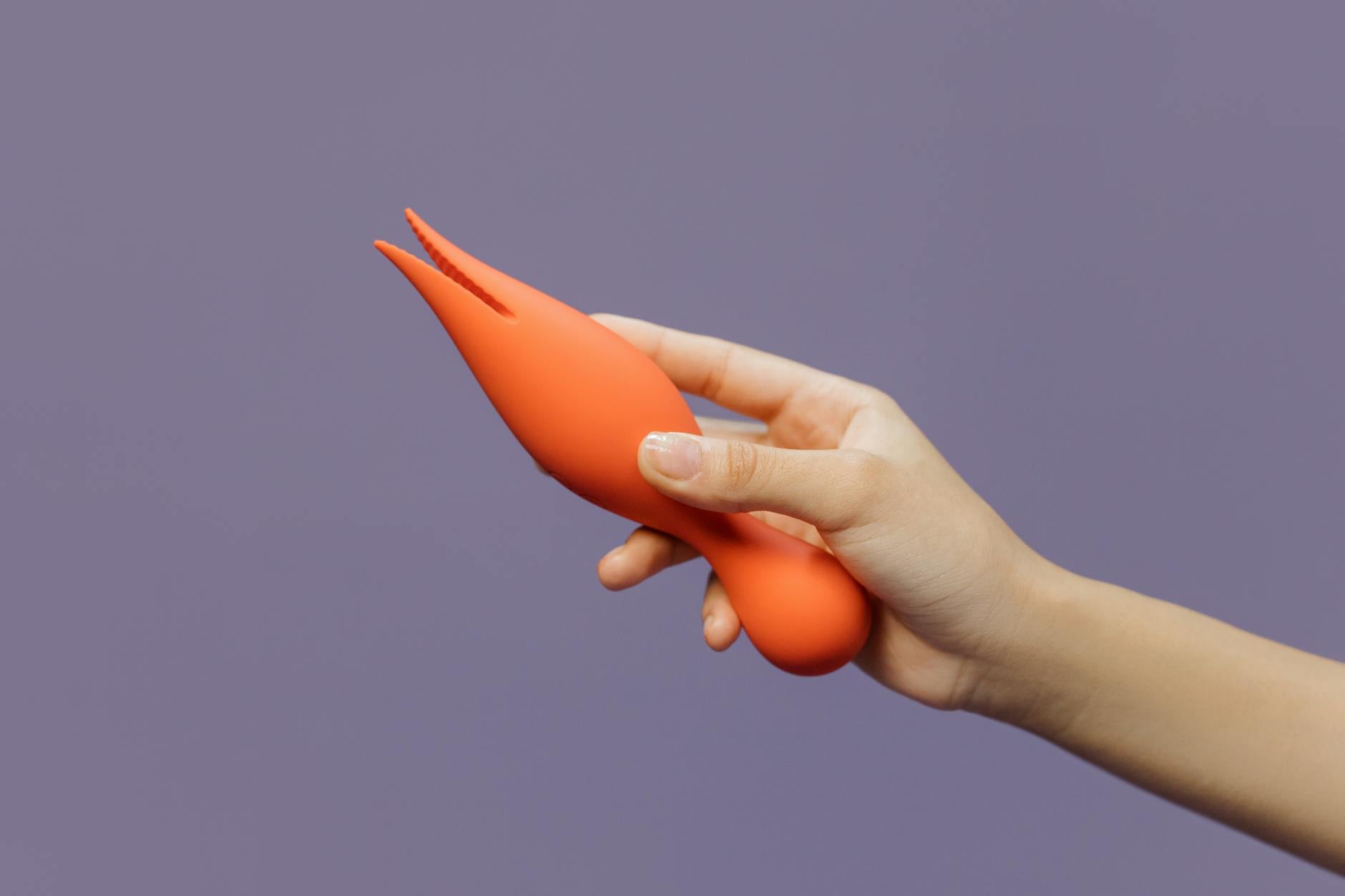
Here's the crucial part: a lemon clitoral vibrator like the Lem uses rapid air-pulse suction instead of vibration. That matters a lot when your nervous system is muted.
Regular vibrators move the toy back and forth, which requires you to feel and integrate that movement. Your brain has to sense the pattern, anticipate it, and build on it. When serotonin dampening is happening, that anticipation chain breaks down. You feel the buzz, but it doesn't connect to arousal.
Suction stimulation is different. It doesn't ask your nervous system to track a pattern. It creates a pressure change that affects a larger area of tissue at once. That broader, less-pattern-dependent input often bypasses the bottleneck that flattens vibration alone. It's why clients on SSRIs often report that the Lem works when other toys don't. It's not magic. It's just a different neural pathway.
The intensity and speed adjustment strategy
Start at pattern 1 or 2. Not because you're broken, but because your nervous system is working harder to register sensation right now. A gentle, slower pulse gives your brain time to actually feel what's happening instead of just detecting it.
Here's the rhythm that works:
- Minutes 1 to 5. Stay at pattern 1. This is signal amplification, not climax chasing. Let your body learn to recognize sensation again.
- Minutes 5 to 10. Move to pattern 2 or 3 if you want. You're building intensity, but slowly. Give your nervous system time to integrate.
- Minutes 10 onward. Stay where it feels good. The goal isn't to reach orgasm as fast as possible. The goal is to rebuild the sensory pathways.
Take longer sessions than you think you need. If you used to climax in 10 minutes, give yourself 20 to 25 now. That extra time isn't failure. It's retraining.
The patience part (which is actually the hard part)
Many people on SSRIs feel pressure to perform the way they did before the medication. That pressure becomes its own blocker. You're waiting for sensation to arrive, aware that it's not arriving, and that awareness shuts everything down further.
The reframe that helps: this isn't about reaching climax anymore. It's about noticing sensation. Can you feel the pulse? Where do you feel it most? Does it change if you shift position? Those small attention shifts are doing the neural repair work.
Some people find that sensation actually improves over time as the body adapts to the medication. Others find a new rhythm that's different but equally satisfying. Some switch medications with their doctor and find sensation returns. All of those are okay outcomes. What matters is not forcing the old pattern back.
When to talk to your doctor about dosage or alternatives
Sexual side effects are a legitimate reason to discuss medication adjustment with your prescriber. You shouldn't have to choose between mental health and a sexual life. A few options that sometimes help:
- Lowering the dose slightly. Sometimes a 10 or 20 mg reduction cuts sexual side effects while keeping mood stable.
- Switching SSRIs. Sertraline and paroxetine tend to have higher sexual side effect rates. Escitalopram, citalopram, and fluoxetine sometimes cause fewer issues for some people.
- Adding something else. Bupropion can actually improve sexual function and is sometimes added alongside an SSRI to offset flattening.
- Taking a medication holiday. Some doctors will support a planned break (usually just weekends) if side effects are severe. This is not standard and not safe for everyone, but it's worth asking about.
The key: you're not being difficult or ungrateful for wanting your sexual life back while staying mentally stable. Your doctor should take that seriously.
The partner conversation (if there is one)
If you have a partner, this is worth explaining clearly. Not "I'm not attracted to you" or "Something's wrong with me." But "My medication flattens sensation. I'm using a lemon clitoral vibrator to work with that. It's not about you, and I'm not broken. I'm just adapting."
Some partners feel relieved to understand it's neurochemical. Some want to participate. Some need reassurance that your pleasure still matters to you. All of that is manageable if you're clear that this is an SSRI thing, not a relationship thing.
If you're solo, there's zero pressure to explain yourself to anyone. You're just reclaiming sensation on your timeline.
The mental piece (it matters more than you think)
Depression and anxiety already convince you that your body doesn't work right. Add sexual flattening on top, and the mind can go to a dark place fast. That spiral is real, and it's worth naming.
What helps: separating the medication side effect from your baseline desire. You didn't stop wanting pleasure. Your brain chemistry did. That's not a character flaw. It's pharmacology.
Using a lemon vibrator while you're on SSRIs isn't giving up or settling. It's being strategic. You chose mental stability. Now you're choosing to have a sensual life anyway. That's resourcefulness, not resignation.
FAQ
Can I use a lemon clitoral vibrator safely while on SSRIs?
Yes. There are no known interactions between SSRIs and clitoral vibrators of any kind. The medication doesn't make the tissue more fragile or sensitive to trauma. If anything, the numbness means you're less likely to over-stimulate yourself. Use water-based lubricant if you want, but you don't need it for safety reasons.
Will my sexual sensation come back if I stop the SSRI?
Often, yes, though it can take weeks or months. Some people find sensation returns within days of stopping. Others notice improvement gradually over 6 to 8 weeks as the medication clears their system. But stopping SSRIs should only happen under medical supervision. Don't do it cold turkey. The withdrawal can be brutal.
How long does it usually take to rebuild sensation with a lemon vibrator?
There's no set timeline. Some people notice shifts within a few sessions. Others take weeks. The nervous system is relearning how to register pleasure under a different neurochemical baseline. Be patient with that process. Progress isn't always linear.
Is it normal to feel disconnected from sensation even with a lemon vibrator at first?
Completely normal. The whole point of using a lemon clitoral vibrator is that it can reach through that numbness better than other stimulation. But "reaching through it" doesn't mean instant sensation. You're still building awareness. Over time, that awareness becomes sensation again.
Should I tell my partner I'm using a vibrator to work around SSRI side effects?
That's your call. If you share a bed or a life together, they might notice. If you want to keep it private, that's okay too. If you do tell them, frame it as problem-solving, not rejection. "I'm using this tool to keep my pleasure alive while I'm on medication that flattens it" sounds very different from "I need this because you're not doing it for me."
Will a lemon vibrator feel different than what I felt before SSRIs?
Probably. Different doesn't mean worse. Some people find they actually prefer the sensation after their nervous system has adapted. Others get back to baseline. The key is not comparing yourself to pre-medication. You're building a new normal, not restoring the old one.
The bottom line
Antidepressants save lives. They also sometimes flatten pleasure. Both things are true. A lemon clitoral vibrator won't fix the medication itself, but it can work with your nervous system in a way that bypasses some of the dampening. Pair that with patience, clear communication if you have a partner, and a willingness to talk to your doctor about dosage or alternatives, and you can have both mental stability and a sensual life. You don't have to choose.