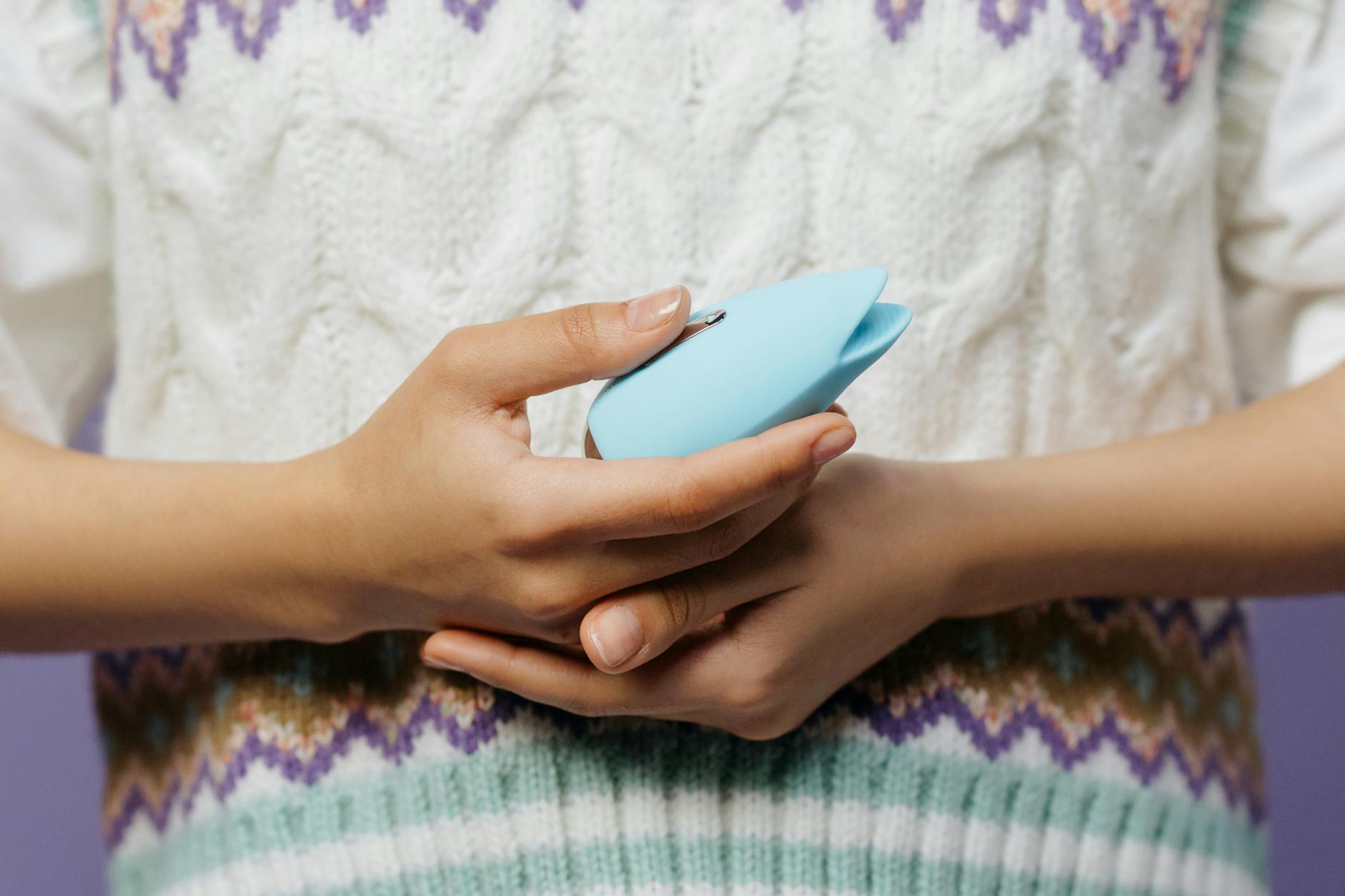
Here's what nobody tells you about clitoral sensation over time
Your clitoris doesn't fade. It rewires. That's the distinction I lean on as a therapist, because the first interpretation kills people's confidence and the second opens a door.
Clitoral sensation changes across your lifespan, but differently than most people assume. At 25, 40, and 55, your clitoris operates under slightly different conditions. None of these conditions are worse. They're just different. And once you understand the mechanics, you can work with your body instead of against it.
What actually changes with clitoral sensitivity over decades
Three physiological shifts happen:
Blood flow patterns. Your cardiovascular system ages. Blood flow to genital tissue becomes less efficient, which means arousal takes longer to build and the engorgement phase feels subtly different. This isn't dysfunction. It's a natural consequence of aging.
Nerve density and receptor sensitivity. Here's the counterintuitive part: nerve density in the clitoris doesn't decline significantly. But the speed at which those nerves fire and communicate with your brain does shift slightly. You're not losing sensation. The signal is traveling a slightly different route.
Hormonal backdrop. Even without menopause, hormone levels fluctuate across your 30s, 40s, and 50s. Testosterone, which drives desire and clitoral responsiveness in all bodies, follows a gradual curve downward. Again, this is normal aging, not abnormal loss.
What doesn't change: the clitoris's fundamental capacity for pleasure. You can still have intense, full-body orgasms. You're just getting there through a slightly different sequence.
Why direct stimulation tools like the Lem become more valuable over time
Here's where a lemon clitoral vibrator enters the picture specifically.
Traditional vibrators rely on broad surface contact and penetration-adjacent stimulation. They work fine at 25 when your body is primed for arousal quickly. But as sensation pathways shift, many people find that softer, broader stimulation stops working as reliably.
The Lem uses air-suction technology instead. This means:
No friction required. Suction stimulates nerve clusters without the mechanical pressure that can feel too much or too little depending on your tissue state that day. You're getting precision without intensity.
Consistent feedback loop. The Lem's sealed contact creates a continuous sensory signal to your brain. As nerve response time shifts with age, this steady, rhythmic input is easier for your nervous system to track and respond to.
Adjustable intensity without guessing. A lemon vibrator's pattern levels let you start at setting 1 and work up. You're not locked into one intensity. This matters more as you age because your optimal stimulus level might shift week to week based on hormones, stress, and blood flow.
How your arousal timeline changes and why warm-up time matters more
At 25, you might reach arousal in 5 minutes. At 45, it might take 15. This isn't a problem. It's information.
Many people interpret longer warm-up time as "something's wrong." It's not. Your body is being more honest about what it needs. And if you work with that honesty instead of fighting it, pleasure actually deepens.
With a Lem vibrator, the longer warm-up becomes an advantage. You're not racing toward orgasm. You're building sensation deliberately.
Practical rhythm: Start 15-20 minutes before you want stimulation to peak. Spend the first 5-10 minutes on external touch, breathing, and mental settling. Then introduce the Lem at the lowest setting. Let your body signal when to increase intensity. You're aiming for a 12-15 minute window from first contact to climax, which is actually more common than people admit.
This isn't slower. It's different. And for most people over 40, it's more reliable than the quick-trigger approach.
Age-related clitoral changes by decade: what to expect
I'm painting in broad strokes here because everyone's timeline is different. But patterns emerge.
Your 30s. Clitoral sensitivity typically peaks here. Arousal is still quick, but you might notice that penetration alone doesn't cut it anymore. Adding clitoral stimulation with a lemon vibrator during partner sex becomes standard, not supplementary.
Your 40s. Warm-up time extends. Orgasms might feel slightly different in shape, though intensity stays stable for most people. You might notice that certain patterns on the Lem work better than others. Pay attention to that. Your body's talking.
Your 50s and beyond. Hormonal shifts accelerate. Tissue changes become more obvious. But here's the thing: many people report the most satisfying orgasms of their lives in this decade. Why? Fewer distractions. Better knowledge of your body. Less performance pressure. A good lemon clitoral vibrator becomes less a novelty and more a reliable tool.
The partner variable: how sensation changes affect partnered sex
When your clitoral sensitivity shifts, partnered dynamics shift too.
Your partner might not understand why what worked last year doesn't work now. If they're used to being the main source of your arousal, extended warm-up time can read as rejection. It's not. It's biology.
The conversation to have: "My body is changing. I need more warm-up time now. And I'd love if you used the Lem with me sometimes." This isn't a criticism of your partner. It's an invitation to evolve together.
Many couples find that introducing a lemon vibrator actually improves partnered sex over 40. Why? Because it removes the pressure on your partner to manually stimulate you to climax. They can focus on kissing, touch, connection. The Lem handles the clitoral work.
If your partner feels threatened by this, that's a different conversation. And it's worth having. Pleasure belongs to both of you.
When clitoral sensation changes signal something beyond normal aging
Not all shifts are normal aging.
If clitoral sensation has completely disappeared and isn't returning with warm-up, increased stimulation, or different partners, talk to a doctor. Certain medications, thyroid conditions, and some forms of diabetes can flatten clitoral response. This is treatable.
If clitoral stimulation that used to feel good now causes pain or sharp sensations, same story. Menopausal tissue changes can sometimes make direct contact uncomfortable. There are solutions, from topical estrogen creams to adjusting how the Lem contacts your body.
The rule: sensation changes are normal. Pain, numbness, or complete loss of response is worth investigating.
How to dial in your Lem use as sensation patterns shift
Three practical moves:
1. Start lower than you think. As nerve response time shifts, what felt perfect at 30 might feel overwhelming at 45. Begin at setting 1 or 2 on the Lem. Your body will signal when to go higher.
2. Experiment with contact angle. The Lem's rounded design means you can vary where it meets your clitoris. Direct contact, slightly off to one side, rapid pulses, slow builds. Your optimal pattern might evolve. Treat experimentation as part of pleasure, not as problem-solving.
3. Track what works. Not scientifically. Just notice. When do you feel most responsive? Morning or evening? Before or after coffee? What setting on the Lem felt best this week? Your body leaves breadcrumbs. Follow them.
Why accepting clitoral change actually improves pleasure over time
Here's the counterintuitive bit: people who resist age-related clitoral changes report lower satisfaction. People who adapt report higher satisfaction.
Why? Because acceptance removes the layer of anxiety. You're not comparing your 45-year-old body to your 25-year-old body. You're getting to know your 45-year-old body on its own terms.
A lemon vibrator becomes part of that acceptance. It's not a workaround for a broken system. It's a tool that works with your body's actual specifications.
Your clitoris at 50 is smarter, more resilient, and more capable of deep pleasure than your clitoris at 25 ever was. It just needs different input. The Lem provides that input. And that's worth everything.
FAQ: Clitoral sensation and aging
How much does clitoral sensitivity actually decrease with age?
Clitoral sensitivity doesn't decrease in an absolute sense. Nerve density stays relatively stable. What changes is the speed of nervous system response and blood flow dynamics. Most people notice the shift happens gradually across their 40s and accelerates slightly in their 50s. The key: you're not losing sensation. You're experiencing a shift in how sensation builds and registers.
Can hormonal birth control affect clitoral sensation as I age?
Yes, and the effect often intensifies over time. Birth control adjusts hormone levels, which can subtly alter clitoral responsiveness. If you've been on the same method for years and suddenly notice sensation changes, that's worth discussing with your doctor. Sometimes switching methods helps. Sometimes adding a lemon vibrator compensates beautifully.
Is it normal to need stronger stimulation as I get older?
Yes and no. Some people do crave stronger stimulation over time. Others find that their optimal intensity stays stable but the type of stimulation needs to shift. Air-suction technology like the Lem often feels more effective than traditional vibration for people in their 40s and beyond, even if the vibration was perfect at 30. Intensity isn't the only variable.
What if my clitoral sensation feels completely different on certain days?
That's normal and worth paying attention to. Stress, sleep, cycle phase (even post-menopause, hormones still fluctuate), caffeine intake, and hydration all affect clitoral blood flow and sensation. If you notice a pattern, use it. Maybe the Lem works better on well-rested mornings. Maybe you need less warm-up after exercise. Your body's talking. Listen.
Does clitoral sensation ever come back if it's faded?
Often, yes. If fading is due to stress, medication side effects, or hormonal fluctuation, addressing the root cause sometimes restores sensation. If it's age-related rewiring, "back" isn't the right frame. Sensation doesn't go backward. But it can become responsive again if you're using tools and approaches that match your body's current state. A lemon vibrator often helps bridge that gap.
Can I still have strong orgasms if my clitoral sensation has changed?
Absolutely. In fact, many people report stronger, longer-lasting orgasms after age 40 than they had before. Why? Your pelvic floor is stronger from years of use. Your brain knows what to focus on. You have less performance anxiety. A good lemon clitoral vibrator paired with realistic expectations often results in the best orgasms of your life. Different doesn't mean diminished.
The bottom line: Your clitoris is evolving, not failing
Clitoral sensation changes across your lifespan. That's not a tragedy. It's adaptation. Your body is becoming a different instrument. The Lem is designed to play that instrument beautifully, whether you're 25 or 65.
The work isn't to fight the change. It's to understand it, adjust your tools and timing, and trust that pleasure is absolutely still available to you. In fact, it's often richer than it's ever been.
If you want to explore how the Lem can work with your body's specific needs right now, get in touch. We're here to help.