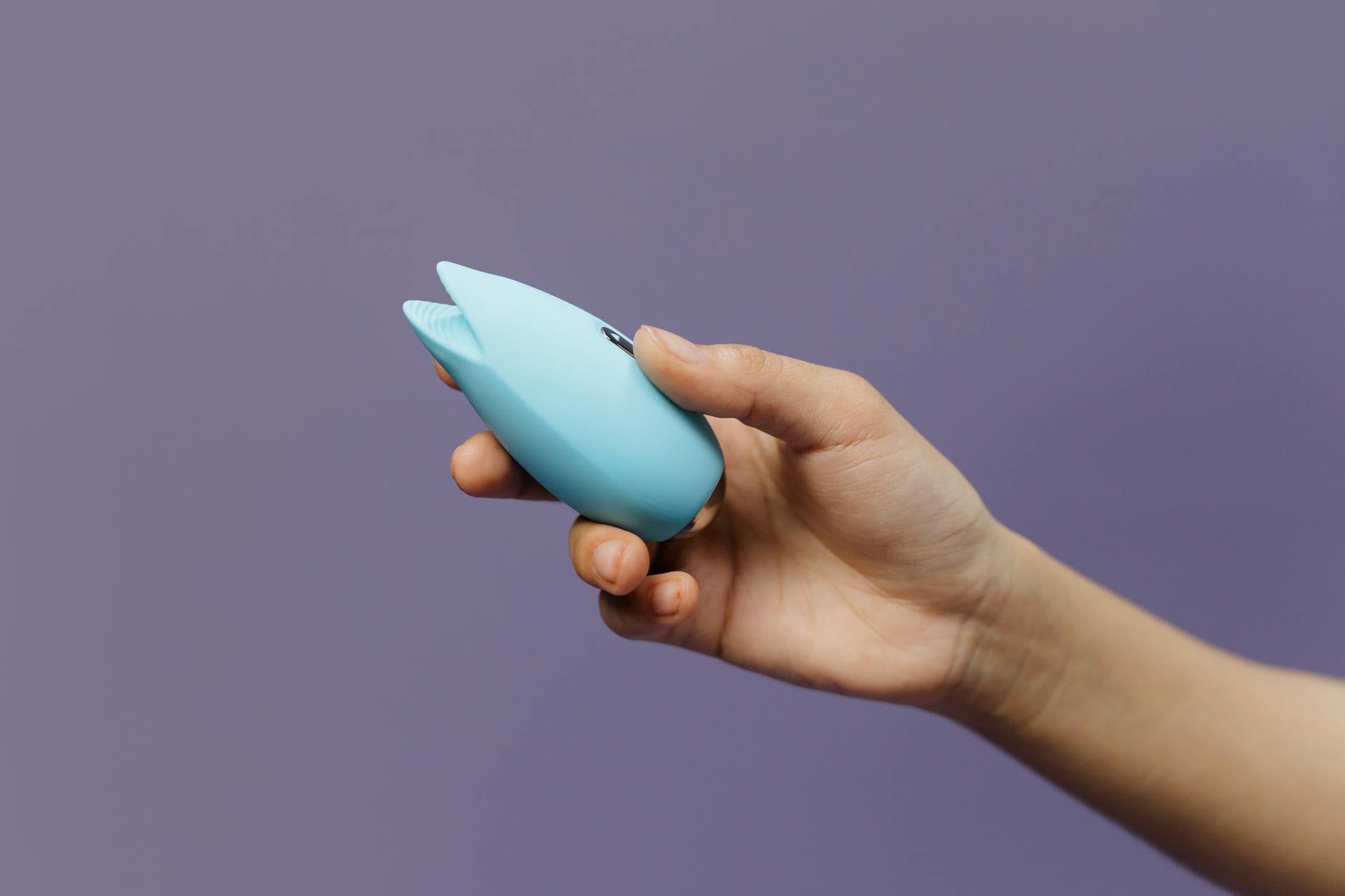
Let's talk about the plateau
You get a new lemon vibrator. First week is incredible. The orgasms are sharp, fast, intense. Then somewhere around week three or four, something shifts. The same setting that made you see stars now feels like background noise. You turn up the intensity, but it's not the same. You wonder if the toy is broken, if you're broken, or if your body just gave up on pleasure.
It didn't. Your nervous system adapted. And there's a way back.
Why your body stops responding the way it used to
This is called desensitization, and it's not a personal failure. It's how your nervous system is designed to work. When you expose any nerve ending to the same stimulus repeatedly, the brain eventually stops registering it as novel. Your clitoris has roughly 8,000 nerve endings concentrated in a tiny area, which makes it incredibly responsive. It also makes it incredibly good at learning patterns.
With a lemon vibrator, desensitization happens faster than with manual stimulation because the consistency is absolute. A human hand varies pressure, rhythm, and contact unpredictably. A vibrator does exactly the same thing every single time. Your nervous system learns the pattern within weeks and turns down the volume on the signal.
This doesn't mean you've damaged yourself. It means your body is working exactly as designed. The good news is that desensitization is reversible.
The role of novelty and variety
Here's what I tell my clients: your nervous system runs on novelty. It craves variation. That's not a character flaw. It's neurobiology.
When you use the same lemon clitoral vibrator at the same setting in the same position every single time, you're essentially asking your brain to get excited about something predictable. Your brain says no thanks. But when you change variables, the signal resets.
This is why people who swap between toys, settings, and positions rarely hit a plateau. Not because the toys are different, but because the novelty keeps the nervous system engaged.
Reset strategy one: The rotation method
Stop using your lemon vibrator for 5 to 10 days. Completely. This is harder than it sounds, but it matters.
During this time, you can still have pleasure. Use your hands. Use a partner. Just step away from the vibrator. What you're doing is clearing the adaptation. Your nerve endings "forget" the pattern they've grown used to.
After the break, when you come back to your lemon vibrator, the intensity returns. This isn't permanent forever, but it gives you a reset. Most people notice a significant difference after just five days.
Reset strategy two: Pattern interruption
If you're not willing to take a break (and I get it), you can interrupt the adaptation by changing your approach.
Switch settings. If you always use level 3, drop to level 1 and spend 10 minutes there before moving up. Your nervous system reads this as new information.
Change your position. If you always lie on your back, try sitting. Try standing. Try side-lying. The slight shift in angle and pressure distribution feels genuinely different to your nervous system, even though it's the same toy.
Change your timing. If you usually use your lemon vibrator at night, try morning. If you're always solo, invite a partner to participate. If you're always focused on orgasm, try just exploring sensation without the goal.
One small variable changed weekly is enough to keep the novelty signal alive.
Reset strategy three: Extended foreplay
You've probably noticed that your body takes longer to warm up than it used to. This is real, and it's actually a feature, not a bug.
When you spend 15 to 25 minutes building arousal before you even touch your lemon vibrator to your body, something shifts. Your parasympathetic nervous system activates. Blood flow increases. The tissues become more responsive. When you finally reach for the vibrator, it hits differently.
This is why partnered sex often feels more intense than solo use. A partner creates build, interruption, and anticipation. You can create that for yourself. Slow down. Let the arousal build across your whole body before you get specific.
The antidepressant wild card
If you're taking SSRIs or SNRIs, plateau might feel like it happens faster than it does for other people. Sexual side effects from these medications are real and common, and they can include delayed orgasm or muted intensity.
This isn't a reason to stop taking your medication. It's a reason to talk to your prescriber about timing. Some people find that if they take their dose at night instead of morning, they get a slightly wider window of responsiveness. Others benefit from a small adjustment in dose or a different medication entirely.
If you're on antidepressants and thinking about using a lemon vibrator to manage plateauing, check out the full guide on how to use a lemon vibrator with antidepressants for more detailed strategies.
When to escalate vs. when to back off
There's a difference between adaptation and actual tissue fatigue. Adaptation is what I've been describing. Tissue fatigue is when you feel soreness, irritation, or rawness.
If you're experiencing soreness after sessions, you're using the toy too frequently or too intensely, and you need to back off. This is different from plateau. Rest between sessions matters. Most people do fine with daily use if they're keeping intensity moderate. If you're pushing intensity levels 5 and 6 every day, your tissues need recovery time.
The difference is this: plateau feels like a lack of sensation. Fatigue feels like discomfort. One calls for novelty. The other calls for rest.
What doesn't work (and why you should skip it)
Don't assume you need a more powerful lemon vibrator. You don't. A higher wattage toy won't solve adaptation because the problem isn't power, it's predictability.
Don't push harder or longer. This often makes the plateau worse because you're doubling down on the same stimulus instead of changing it.
Don't avoid your lemon clitoral vibrator for months hoping you'll regain sensitivity. Months is overkill. Five to ten days is enough for a reset.
The permission piece
Here's what I notice: people often feel guilty about plateau. They think it means they're broken or that their toy doesn't work. Neither is true.
Plateau means your nervous system is smart enough to adapt. It means you've been using your toy consistently. It means you have the chance to get creative and actually dial in what you really want instead of chasing the same high forever.
Your pleasure matters. Your lemon vibrator is a tool. And you get to decide how you use it.
Frequently asked questions
How long does it take to regain sensitivity after a break from my lemon vibrator?
Most people notice a significant shift in intensity after just 5 to 10 days away. The nerve endings don't truly "forget," but the adaptation resets enough that the sensation feels fresh. Don't wait longer than two weeks unless you're also dealing with tissue fatigue, which has a longer healing timeline.
Can I use different lemon sexual toys to avoid plateau?
Yes, but only if you're rotating regularly. If you use lemon vibrator A for two weeks, then switch to lemon vibrator B for two weeks, your nervous system stays engaged because the stimulus is actually different. The problem comes when you stick with one toy long-term without variation. Novelty beats toy quality every time.
Is plateau a sign I'm using my lemon clitoral vibrator too much?
Not necessarily. Plateau and overuse are different. Plateau is adaptation. Overuse shows up as soreness, irritation, or numbing that doesn't go away after a few days' rest. You can use your toy frequently and never hit plateau if you're rotating settings and positions. You can also use it rarely and still adapt if you're doing the exact same thing every time.
Does stopping my lemon vibrator use temporarily make me lose my ability to orgasm at all?
No. Taking a break from the vibrator doesn't affect your general sexual function. If anything, it often resets your nervous system and makes orgasm feel more accessible across different types of stimulation. You're not losing a skill. You're giving your nervous system space to recalibrate.
Can I fix plateau by using my lemon vibrator on different parts of my body?
Yes. If you normally use it directly on your clitoris, try using it on the surrounding vulva, your inner thighs, or the area just above your clitoris. The pressure and angle change enough to feel novel. This is especially useful if you want to keep using your toy regularly without taking a full break.
What if pattern interruption and breaks don't work?
If you've tried rotation, novelty, and position changes and the plateau isn't lifting, talk to a doctor. Sometimes persistent numbness or muted sensation points to a medical issue like vulvodynia or nerve compression that's worth investigating. This is rare, but it's worth ruling out before you assume it's just adaptation.
The bottom line
Plateau isn't failure. It's your nervous system doing its job. You didn't break your lemon vibrator, and you didn't break yourself. You just need to remind your nervous system that novelty exists. Swap your routine. Take a short break. Change positions. The intensity you felt in week two is still available to you. You just have to give your body permission to feel it again.
If you want to dive deeper into using your lemon clitoral vibrator strategically, check out the guide on lemon vibrator intensity settings for more ways to work with your body's natural responses instead of against them.