
Here's the thing about bringing toys into partnered sex
It feels like a risk. Like you're saying something's missing, or like you're criticizing what's already happening. So most people don't say anything at all. They wait for a "right moment" that never comes, or they sneak it in and hope their partner doesn't notice, which defeats the whole point. The irony is that the actual conversation is nowhere near as scary as the fantasy version you've been building in your head.
I've sat with hundreds of couples in my practice, and the pattern is always the same. The person wanting to introduce a vibrator (whether that's a lemon clitoral vibrator or any other toy) has been rehearsing this conversation for weeks. Their partner has no idea it's coming. When it finally happens, it takes about ninety seconds and ends with "Oh, I thought you'd be upset" or "Why didn't you just ask earlier?"
You're not breaking bad news. You're just being honest about what you want.
Why the conversation feels harder than it is
Four things are usually happening under the surface, and naming them helps.
First, you're carrying cultural baggage. For decades, vibrators were supposed to be shameful or a sign that something was wrong with the relationship. They weren't. That story was just a really effective way to keep people quiet and isolated. It didn't reflect reality then and it doesn't now.
Second, you're catastrophizing. You're imagining your partner feeling inadequate, which means you're assuming they'll believe the same lie you're worried about. Most people don't. When someone you care about says "I'd like to try something new," the healthy response is curiosity, not shame. That's not naive. That's just how secure attachment works.
Third, you're treating this as a bigger conversation than it is. You're bundling "I want to explore pleasure more" with "our sex life is failing" and "I don't feel desired." Those might be true, but they're not the same conversation. Keep them separate.
Fourth, if you've got relationship friction elsewhere, this feels like the thing that will break the dam. It usually isn't. It's just the first honest thing you're trying to say.
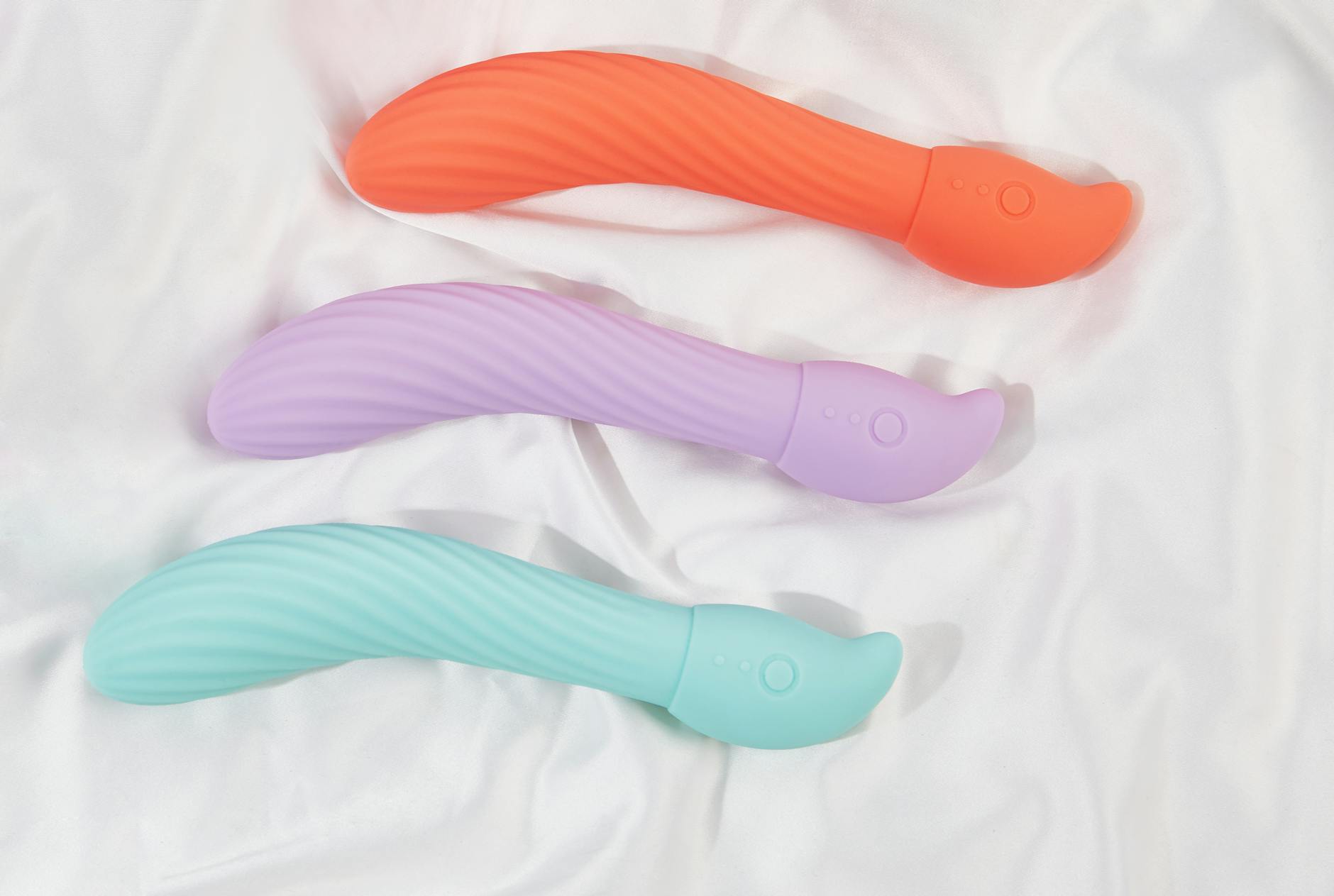
Photo by IFONNX Toys on Pexels
The three-part framework that actually works
When I coach couples through this, I use a structure that removes the guess work. You don't need a perfect moment or a perfect mood. You just need clarity.
Part One: Lead with curiosity, not demand. Start with something like, "I've been thinking about trying something new in bed, and I wanted to talk to you about it" or "I read something interesting about clitoral vibrators and got curious." Notice what's missing: shame, apology, explanation. You're not buttering them up. You're just being direct.
Part Two: Be specific about what you want, not why you think you need it. Don't say, "Our sex isn't satisfying enough." Say, "I think it would feel really good to use a lemon vibrator together, and I'm interested in trying it." One is a criticism. The other is an invitation. The second one is also true, and it's the only true thing that matters for this conversation.
Part Three: Make it collaborative. Ask what they think, what they're feeling, whether they have questions. Then actually listen. This isn't a performance. This is the beginning of a negotiation, and both people get a voice.
If your partner says no initially, don't collapse. Ask why. Often the resistance isn't about the toy. It's about feeling unseen ("You want something I can't provide"), or about pace ("This is too fast"), or about specific logistics ("I'm not sure how that works"). Each of those is solvable. A flat no usually isn't, but a "Why?" often transforms it into "Oh, I understand. Here's what would help me feel better about this."
What to actually say (word for word)
If you want a script, here's one that works.
"Hey, so I've been thinking about something and I want to talk to you about it. I've been curious about using a vibrator during sex. I think it would feel really good, and I'd like to try it with you. What do you think?"
That's it. Forty-two words. It's clear, it's not defensive, and it invites response.
If they ask questions, answer honestly. If they say "I don't know," ask "What would help you feel comfortable exploring this?" If they say "I feel like you're not satisfied with me," that's the moment to separate the conversations. "This isn't about you not being enough. This is about me wanting to experience more of what feels good. And I want to experience it with you."
That distinction is everything.
When your partner is nervous (and how to help)
Some people are instantly excited about the idea of exploring a lemon clitoral vibrator or other adult toys together. Others need time. Some worry they'll be doing it wrong, or that the toy will replace them, or that they'll finish too quickly once the vibration starts. These are all legit concerns, and they're all addressable.
If your partner is nervous, the best thing you can do is stay curious instead of defensive. "What's worrying you most?" gives them permission to name it. Then you get to actually solve the thing, instead of guessing around the edges.
You might also ease in together. You don't have to buy a Lemon vibrator tomorrow and use it during sex next week. You could look at one together online. You could read reviews. You could talk about how you imagine using it. You could use it solo first and then tell them what it felt like. Pacing matters.
One thing that helps: your partner gets to opt out of any specific session. "I'd like us to try this, and if at any point you're uncomfortable, we stop and we talk about it." That safety net removes a lot of the pressure.
The conversation after the conversation
Once you've introduced a toy and actually used it, check in. Not in a clinical way. Just "How did that feel for you?" or "What did you like?" or "Anything you'd change next time?"
Most people find that the second time is easier than the first. The novelty of the thing itself (a beautiful lemon-colored toy, or whatever you chose) wears off and you're just back to the familiar territory of pleasure and connection. Which is exactly the point.
If something didn't work, that's fine. Maybe the positioning was awkward. Maybe the rhythm felt off. Maybe your partner got in their head. These are problems to solve together, not signs that you made a mistake by asking.
If it did work, great. Do it again. Talk about what felt good. Adjust. Explore.
The goal isn't to perform. It's to have more pleasure, more honesty, and more of you.
Addressing the deeper stuff (if it exists)
Here's the hard truth: sometimes the resistance to introducing a vibrator isn't really about the vibrator. It's about disconnection, control, or deeper relationship issues that need actual couples work.
If your partner responds to "I want to try a lemon vibrator together" with "Absolutely not" and won't engage further, that's worth exploring with a therapist. Same if you're avoiding the conversation because you're afraid of your partner's reaction, or if you're considering doing it secretly.
Those patterns point to something bigger than toys. They point to a relationship where honesty is risky, or where pleasure is treated like a threat. That's solvable, but it takes more than a script. It takes real conversations about trust, desire, and what you both actually want.
For most couples, though, introducing a vibrator is just the first honest thing. It opens the door to more conversation, more exploration, more of what partnership can actually be.
People also ask
Will my partner feel threatened by a clitoral vibrator?
Most won't, but some might initially. The threat usually isn't about the toy itself. It's about feeling like they're not enough, or like their role is being replaced. That's a feeling worth listening to, even if the logic isn't sound. When you check in after using one, the feeling usually shifts. "Oh, I see. This isn't about me at all. This is about you enjoying pleasure more." The magic happens when they realize that more of your pleasure is actually better for both of you.
What if my partner wants to use a vibrator but I'm not ready?
Then you get to have the same conversation in reverse. The framework is identical: curiosity, specificity, collaboration. Your hesitation is worth naming. Maybe it's about pace. Maybe it's about your own relationship to pleasure. Maybe it's about something completely unrelated. Give yourself the same grace you'd offer your partner. "That's interesting to me. I'm not there yet, but I'm willing to think about it. Can you tell me more about what appeals to you?" That stance keeps the door open without forcing you through it before you're ready.
Should I buy the vibrator before or after the conversation?
After. Buying it first can feel presumptuous ("I already decided we're doing this"), and it removes your partner's voice from the choice. Having the conversation first also means you can shop together, or at least discuss what style might work. That's part of the pleasure. You're building something together, not surprising them with something you picked out alone. If you're looking at lemon vibrators or other clitoral toys, browsing together can actually be fun and flirty.
What if we've been together for years and I'm embarrassed to bring this up now?
Longer relationships often make this harder, not easier. There's a version of yourself that your partner has always known, and introducing a new desire can feel like a betrayal of that. But you've also both changed. You deserve to explore your pleasure more now than you did five years ago. That's not disloyal. That's just growing. The conversation might feel bigger because of the history, but it's the same conversation. "I've been thinking about this, and I want to explore it with you."
How do I know if my partner is actually okay with it or just going along with it?
You ask. "I want to make sure you actually want to do this and that you're not just doing it for me. How are you really feeling?" People give lots of signals besides words: body language, enthusiasm level, whether they initiate using it again, whether they engage in the conversation after. If something feels off, trust that. "I'm noticing you seem quiet about this. Talk to me." Sometimes people need a few days to process. Sometimes they need to try it once and then reassess. Give them that space.
The real thing underneath
Introducing a toy into your partnership is less about the vibrator and more about permission. Permission to want things. Permission to ask for them. Permission to prioritize your own pleasure without feeling like you're being selfish or unfaithful.
That permission changes everything. Once you've had it, once your partner has heard you ask for something sexual without shame and has responded with openness, the whole dynamic shifts. You're not managing fear anymore. You're just two people exploring what feels good.
Start with the conversation. Everything else follows from that.