Let's talk about the thing no one wants to admit
You loved your lemon vibrator. It was perfect. And then, somewhere between month three and month six, it stopped feeling like much of anything.
Your tissues didn't break. Your nerves didn't vanish. What happened is called sensory adaptation, and it happens to almost everyone who uses the same stimulation regularly. Your nervous system gets really efficient at filtering out predictable input, which is great for tuning out background noise but terrible for maintaining that rush of sensation.
Here's the good news: it's completely reversible. This isn't permanent numbness or damage. It's just your body being smart in a way that doesn't serve your pleasure. And there are real, specific things you can do to wake it back up.
Why your clitoral vibrator stops feeling intense
Sensory adaptation happens at the neurological level, not the tissue level. Your body receives the same signal over and over, and after a while, it stops firing off the alarm bells. Think of it like living next to a highway. The first week, you notice the sound constantly. By month two, your brain has classified it as non-urgent background noise and you barely register it.
With a lemon vibrator, this happens in a few specific ways.
First, there's temporal adaptation. When you use the same pattern at the same intensity, the same nerves that light up the first time begin to require stronger signals to produce the same response. It's not that you're becoming numb. It's that your nervous system is being efficient. It says, "I know this signal already, I've filed it away, moving on."
Second, there's sensory habituation tied to anticipation. If you use your lemon clitoral vibrator the same way every time (same pattern, same duration, same position), your brain predicts exactly what's coming. Novelty and surprise actually amplify sensation. Predictability dampens it.
Third, there's physical fatigue in the receptor cells. The mechanoreceptors on your clitoris have been firing repeatedly, and they need time and rest to recalibrate their sensitivity thresholds. This isn't damage. It's fatigue. Like any muscle, sensory receptors work better after a break.
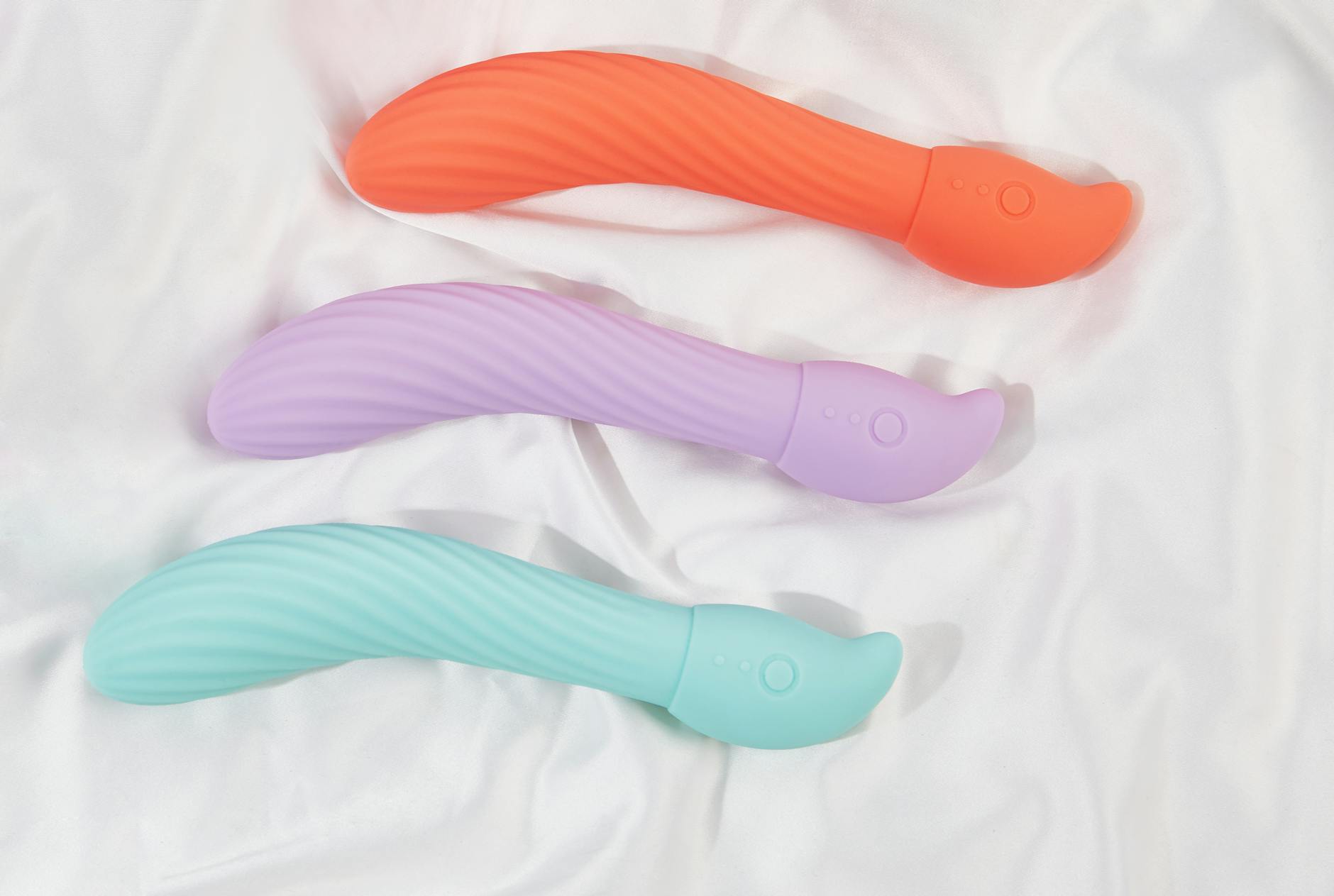
Photo by IFONNX Toys on Pexels
The recovery period: how long and what to expect
Honestly? It depends on how heavily you've been using your vibrator. If you've been using it daily with the same pattern for six months, you're looking at a two to three week reset cycle. If it's been lighter use or more varied, one to two weeks usually does it.
The reset works best as a full break, not a gradual reduction. Staying off your lemon vibrator completely for seven to fourteen days allows your mechanoreceptors to downregulate and become sensitive again. This feels counterintuitive because the impulse is usually to use it more to get the feeling back. That makes it worse.
During that break, your nervous system isn't sitting idle. It's recalibrating its baselines. The background noise becomes quieter, so when you return, the signal feels louder again.
After the break, expect that first session to feel noticeably different. Not necessarily more intense right away, but more present. You'll feel details you'd stopped noticing. The sensation might feel sharper or slightly different in texture, depending on what pattern you choose. This is your nervous system waking up.
How to rebuild sensation without numbing out again
The reset period is only half the work. The second half is changing how you use your lemon sexual toy so the plateau doesn't happen again as quickly.
Vary your patterns every two to three sessions. Your Lem has multiple settings for a reason. If you've been using pattern 3 exclusively, switch to pattern 5 or 1 for your next session. Different patterns engage different nerve fibers in slightly different ways. Variety is the most powerful tool for preventing adaptation.
Change your position regularly. Angle the vibrator differently. Apply it from a slightly different direction. Use it while you're in a different position (lying on your back versus on your side, for instance). This shifts where the stimulation lands on your clitoris, which keeps the signal novel.
Extend your warmup time. Spend ten to fifteen minutes on foreplay or gentle touch before reaching for your lemon clitoral vibrator. This does two things: it builds anticipation, which amplifies sensation, and it gives your nervous system time to become present and attentive rather than expecting the stimulation right away.
Alternate between different intensities within a single session. Don't start at maximum and stay there. Begin at a lower setting, build up, then drop back down. This rhythm prevents your nervous system from settling into a baseline of continuous stimulation.
Take intentional breaks. You don't need a two-week reset every few months. But taking one or two days off per week, or one week off per month, dramatically slows the adaptation process. Your body knows it might not get the same stimulus tomorrow, so it stays alert.
The partner conversation that changes everything
If you're in a relationship, the plateau can feel like a personal rejection or like your body's betraying you. It's neither. But it can create weird distance if you don't name it.
The most useful conversation happens early: "I'm noticing my sensitivity is shifting, and it's not about you or us. It's just how my nervous system works. I'm going to take a little break from my lemon vibrator and change up how I use it, and I wanted you to know that's what's happening so you're not reading it wrong."
This does three things. It clarifies that pleasure shifts are normal and physiological, not emotional. It signals that you're taking responsibility for your own sensation, which partners usually find hot. And it prevents them from internalizing the change as something they did or didn't do.
If you use your Lem as part of partnered sex, the reset period can actually be a good moment to focus on other kinds of touch or sensation play. You might discover things you'd forgotten about.
When it might be something else
Sensory adaptation accounts for about eighty percent of pleasure plateaus. But there are a few other things worth checking.
If you're on antidepressants, particularly SSRIs, they can flatten sensation over time. This isn't your vibrator and it's not permanent, but it's worth discussing with your doctor. Many people manage this by adjusting timing or trying different medications.
If you've been using your lemon vibrator daily for months and suddenly notice pain or significant loss of sensation alongside numbness, that's worth checking with a healthcare provider. True nerve damage from vibrator use is rare, but it's not zero, and you want to rule it out early.
Hormonal shifts can also change sensation temporarily. If you use the same lemon clitoral vibrator across your cycle, you might notice it feels different at different times of the month. That's normal and usually resolves on its own.
FAQ: reset sensitivity and get back to pleasure
How long should I actually take off my lemon vibrator for a full reset?
Seven to fourteen days gives your mechanoreceptors time to downregulate and recalibrate. Anything less and you risk cutting the reset short. Anything longer than three weeks is usually overkill unless you've been using your lemon sexual toy extremely intensively.
Can I use a different vibrator during the reset period, or do I have to take a complete break from all vibrators?
The reset works better with a complete break from any vibration. But if that feels impossible, using a different vibrator with a completely different sensation (like a wand instead of your lemon sucker, or a different pattern intensity) can work as a partial reset. It's not as effective as complete abstinence, but it's better than using the same device.
Will I lose my ability to orgasm with my lemon vibrator if I take a week off?
Not at all. Your ability to respond to your lemon clitoral vibrator is waiting in your nervous system. A break actually restores it. You might find it takes slightly longer to reach orgasm in that first session after the reset, but the intensity usually comes roaring back within two to three sessions.
Is it true that using lemon vibrators on lower settings can prevent plateau?
Partially. Lower intensity does slow adaptation, but it doesn't prevent it entirely if the pattern and position stay the same. The biggest factors are variety (different patterns and positions) and taking breaks. Starting lower is helpful, but you still need to vary your approach.
What if I reset, but the plateau comes back faster the second time?
That's actually normal. The second adaptation cycle tends to be faster than the first because your nervous system has already learned this signal once. This is why building variety into your regular use matters more than doing occasional resets. One reset followed by repetitive use won't help long-term. But one reset followed by varied, intentional use typically prevents the problem for months.
Can I prevent this from happening in the first place if I'm just starting to use a lemon vibrator?
Yes. The formula is simple: vary your patterns, vary your positions, take intentional breaks, and don't use the same lemon sucker the same way every single time. If you start with this approach, you might not hit a major plateau for six months or longer. And when sensitivity does shift, you'll know exactly how to handle it.
Bring sensation back, keep it back
Sensory adaptation isn't a sign that you're broken or that your lemon vibrator isn't working anymore. It's your nervous system doing its job too well. The reset is straightforward, and preventing the next plateau is simpler than you'd think. Take the break, change up your approach, and your pleasure comes roaring back. You deserve sensation that feels as good as it did the first time. You're just a few intentional changes away from getting it back.