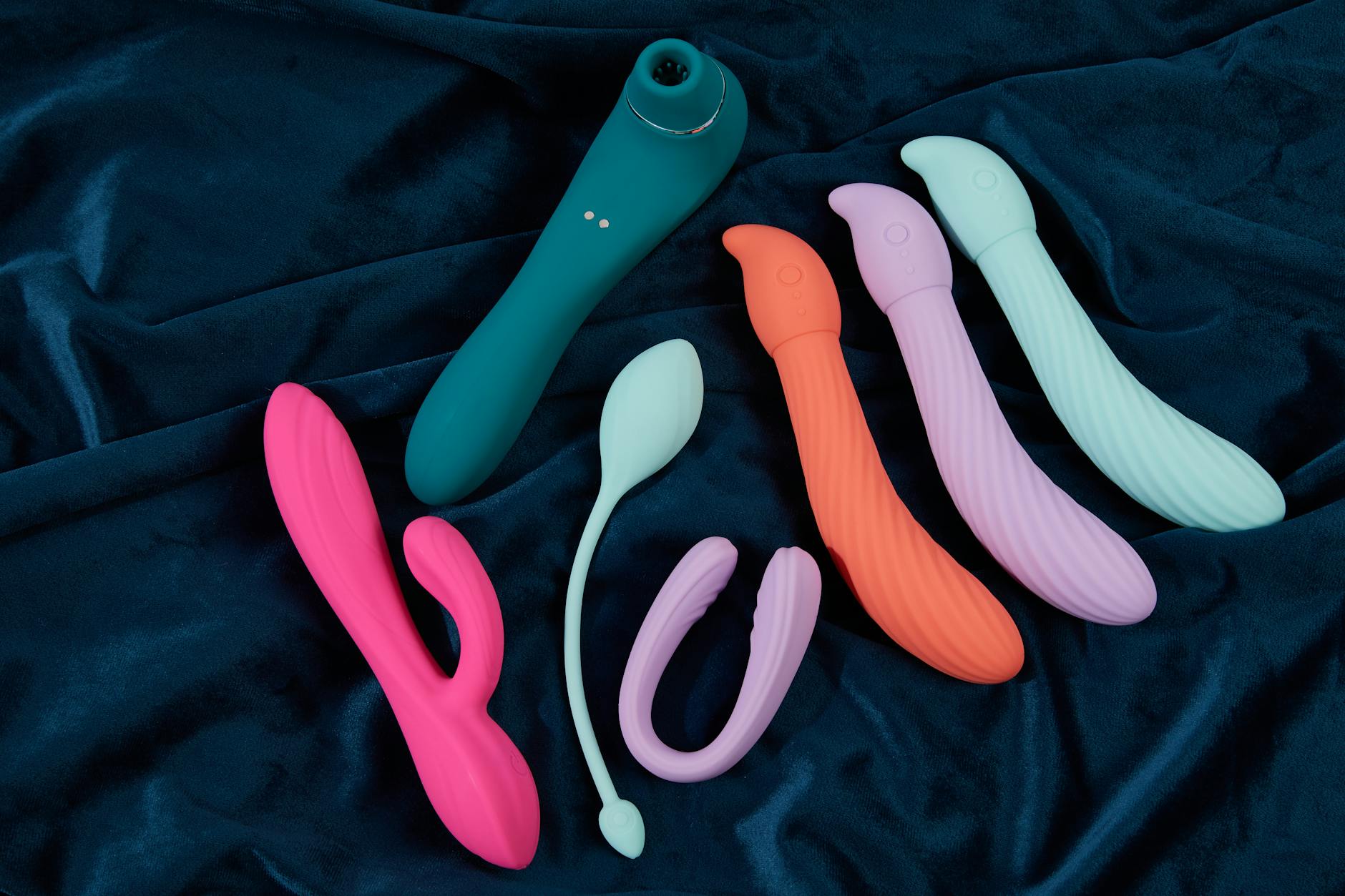
Let's talk about what actually changes
Your body shifts after 45. That's not news. What nobody tells you clearly is that the toys you loved at 35 might feel wrong now, not because you've lost sensation but because your tissue has changed. The good news? Lemon vibrators, which work through gentle suction rather than direct vibration, often feel dramatically better once you hit this phase of life.
Here's what's actually happening in your body, and why it matters for pleasure.
The tissue shift nobody explains
Estrogen production drops as you move through perimenopause and into menopause. This affects the vulva in three specific ways.
First, the outer and inner labia thin slightly. The tissue becomes less plump, less elastic. That sounds clinical and frankly depressing. In practice, it means direct friction from a traditional wand or bullet vibrator can feel sharper, sometimes almost uncomfortable. You're not broken. Your body just needs a different approach.
Second, the clitoris itself becomes more sensitive to direct pressure. The hood covering the clitoris (which is mostly under the surface, by the way) becomes thinner. That means the nerve bundle at the tip has less padding. Direct vibration can overstimulate in a way that feels almost raw. Again, not broken. Different.
Third, natural lubrication decreases. Without consistent moisture, friction-based stimulation can feel dry, almost sticky. A lemon clitoral vibrator doesn't require the same level of natural lubrication because suction works differently than vibration does.
Why suction changes the game
A lemon vibrator doesn't vibrate against your skin. It creates a gentle seal and uses air-pulse suction to stimulate the clitoris. Think of it less like a traditional vibrator and more like a carefully designed tool that mimics a specific kind of touch.
This matters because suction stimulates the clitoris without the same mechanical friction that can feel too intense on thinner tissue. You get consistent, focused pressure without the buzz. Many people over 45 find that suction creates deeper, longer-lasting arousal and more intense orgasms than they had with vibration alone.
The Lem, a lemon clitoral vibrator design, uses seven intensity settings. Starting low (pattern 1 or 2) on your first try is key. The suction sensation feels nothing like traditional vibrators. It's warmer, more enveloping, less buzzy. Your brain needs a moment to recognize it as pleasure.
What changes in arousal timing
Here's something else that shifts: arousal now takes longer to build. Not because you're less interested or less capable of pleasure, but because the physiological chain reaction is slower. Blood flow takes longer to concentrate in your vulva. The clitoris takes longer to engorge and swell.
With traditional vibrators, many people over 45 find they're racing against the clock. They need intensity quickly, but the body isn't ready. A lemon suction vibrator actually rewards patience. The lower settings work with your slower arousal curve rather than against it. You can start at a gentler intensity and let your body build gradually. By the time you reach settings 4 or 5, you're fully responsive and ready.
This isn't a downgrade. It's actually a chance to experience arousal as a full-body process instead of a quick sprint.
The comfort factor matters more now
When you were younger, discomfort during or after toy use might have felt temporary, a small price for pleasure. Now, soreness lingers. You might experience minor irritation for days. That changes the math entirely.
Because a lemon vibrator uses suction rather than friction, there's significantly less potential for irritation. You're not creating heat through repeated contact. You're not wearing away delicate tissue. Your vulva stays comfortable during and after use, which means you can actually use the toy regularly without needing recovery days in between.
If you've been hesitant about toys since you turned 45, comfort is often the real issue. You're not imagining it. The solution isn't to stop using toys. It's to switch to ones that work with your body now.
Positioning and pressure feel different too
At 45 and beyond, the angle of your clitoris shifts slightly due to changes in pelvic floor tension and the slight loss of skin elasticity. Direct-contact vibrators often hit at an angle that feels off. Lemon clitoral vibrators, because of how the cup-shaped head works, adapt to your anatomy more naturally.
You can experiment with angles and find what works without fighting your body's geometry. The seal creates consistent pressure regardless of slight positioning shifts. No more hunting for the "right spot" and then losing it the moment you shift your hips.
Building a routine that lasts
Here's my strongest recommendation: start slow and build over weeks, not days. Pick up a lemon vibrator, spend your first session just holding it, feeling the weight and shape in your hand. Use it at setting 1 for five minutes your first time. That's it.
Your nervous system is learning a new sensation. Your tissue is adapting to stimulation in a different way. Your brain is reframing what arousal feels like. That takes time. Most people by week 2 are using settings 3 to 5 and experiencing much more intense sensation than they got from their old toys.
Once you've built tolerance and comfort, your body responds faster, sensation deepens, and orgasms often become more reliably intense. The shift isn't immediate. It's worth it.
When to check in with a doctor
If you experience pain, burning, or unusual discharge, that's your signal to see a doctor, not a reason to quit. Genitourinary syndrome of menopause (GSM) is common and highly treatable, often with topical vaginal estrogen that works quickly. With proper treatment and the right tool, pleasure becomes accessible again.
Don't confuse normal tissue changes with pathology. Normal changes are: tissue feels thinner, direct friction is uncomfortable, arousal takes longer, you need more lubrication. Those are reasons to switch to a lemon suction vibrator. Pain, burning, or discharge that persists are reasons to call your doctor.
FAQ
Do lemon vibrators work for everyone over 45?
Most people find them more comfortable than traditional vibrators once they're past 45, but bodies vary. Your response depends on how significant your estrogen drop has been, whether you're using hormone therapy, your natural clitoral sensitivity, and your history with toys. If direct vibration has always felt intense, suction will feel gentler. If you've never had sensitivity issues, you might not notice a difference. There's only one way to find out.
How long does it take to feel pleasure from a lemon vibrator the first time?
Unlike traditional vibrators that might create instant sensation, lemon clitoral vibrators require your body to recognize the suction stimulus. Most people report that the sensation feels strange or not much of anything for the first 3 to 5 minutes. By minute 10, when your nervous system adjusts, pleasure typically emerges. By your second or third session, the sensation comes faster. This is totally normal and not a sign the toy isn't working.
Can you use a lemon vibrator if you're on hormone replacement therapy?
Yes. If you're on HRT, your tissue thickness and natural lubrication likely feel closer to what they were before menopause. You might find traditional vibrators comfortable again. A lemon suction vibrator is still worth trying because many people prefer the sensation regardless of hormone status. The gentler approach doesn't stop being effective just because your estrogen is higher.
What's the difference between a lemon vibrator and a regular clitoral vibrator?
Traditional clitoral vibrators use vibration, oscillation, or rotation to create stimulation. Lemon vibrators use air-pulse suction. The suction creates a gentler, more enveloping sensation that doesn't rely on friction. For people over 45 with thinner tissue or heightened sensitivity, suction is often more comfortable and produces stronger sensation. For people under 45 with no sensitivity issues, the difference might feel minimal.
Do lemon vibrators need more lubrication than other toys?
No. In fact, because they work through suction rather than friction, they're less dependent on lubrication. That said, adding a small amount of water-based lubricant around the opening of the cup can help the seal form more easily and reduce any minor sticking sensation. You don't need much. A dime-sized amount is usually enough.
How do you know if a lemon vibrator is actually right for your body?
Give it three to four sessions before deciding. Your first session is about adjustment, not pleasure. By session 3, you have enough experience with the sensation to know whether it works for you. If you're still feeling uncomfortable or the sensation isn't building into arousal by then, it might not be your tool. That's valuable information. Different bodies have different preferences, and that's okay.
The bottom line
Your body at 45 is not a diminished version of your body at 25. It's a different version. Lemon vibrators aren't a consolation prize for aging. They're a better match for your current anatomy and nerve sensitivity. Many people find that pleasure actually deepens after 45 because they finally have a tool that works with their body instead of against it. Give yourself permission to experiment, start slow, and build a routine that feels good. Your nervous system will thank you.